

As Huntington Quarterly has grown and developed over the last 35 years, so has the city it calls home. Curious as to what’s ahead for Huntington, we asked four community leaders to share their predictions about the future of the Huntington region.
By Dawn Nolan
HQ 127 | AUTUMN 2024
Steve Williams Mayor of Huntington
It would be difficult to find someone who is more optimistic about Huntington’s future than Mayor Steve Williams. When he was elected in 2012, he knew changes needed to be made for Huntington’s future success. That’s when he started working on the Huntington Innovation Project (HIP), a community revitalization proposal, which later led to Huntington’s being named the grand prize winner of the America’s Best Communities competition.
HIP focused on redevelopment of three areas: Fairfield/Hal Greer, Highlawn and the West End. In addition, the implementation of high-speed broadband was a top priority.
“We chose those areas because the neighborhoods had started to decline as factories and businesses had closed,” says Williams. “Now, we are utilizing innovative solutions to help revitalize these neighborhoods.”
With the demolition and rebuilding of properties, streetscape projects and roadwork, Williams says that Huntington can currently be viewed as “one giant construction site,” but that is necessary for future progress.
“Folks complain about it, but we’re doing things now that haven’t been done in the last 60 years,” he explains. “These things don’t just happen by happenstance; we’re very intentional in everything that we do. For us to grow for the next 50 years, we must lay the foundation today.
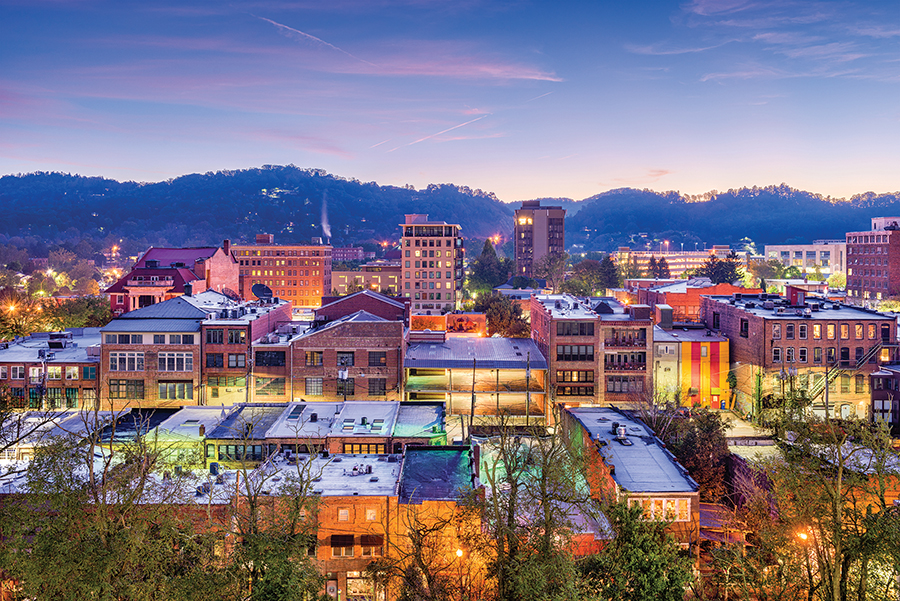
“My general predictions about Huntington’s future are brighter than anyone could imagine. Huntington is developing into the gateway of middle Appalachia. Because of the innovation and growth that’s occurring, Huntington is going to be identified in the same breath as areas like Chattanooga, Greenville and Asheville.”
Williams likes to describe Huntington as “a garden ready to bloom.”
A few specific predictions that Williams has about Huntington’s future are:
- Downtown will become more dynamic as development projects are completed including the Fourth Avenue Innovation Hub, the Prichard Building/Ninth Avenue Streetscape and renovations to the Coal Exchange and Morris buildings.
- There will be creation and expansion of digital jobs, which will create other opportunities and lead to an increase in population.
- In collaboration with the U.S. Army Corps of Engineers, the riverfront will be redeveloped.

Tricia Ball President of the Huntington Regional Chamber of Commerce
Tricia Ball understands the importance of entrepreneurship and small business success. Prior to taking the helm of the Huntington Regional Chamber of Commerce in 2022, she was the acting director of Marshall’s Brad D. Smith Business Incubator and associate director of the Center for Entrepreneurship and Business Innovation (iCenter).
Looking forward to the next 35 years, she predicts the region will become “at first a destination, then an inspiration.” She says she believes that, as we successfully attract and retain businesses and talent, we will become a model for economic development that other areas across the country seek to emulate.
“I believe the exciting announcements and developments we have been experiencing recently — Nucor Steel coming to West Virginia, renovations to the former Prichard Hotel, Marshall’s baseball field and the cybersecurity center — are only the tip of the iceberg. Our best and brightest days lie ahead of us,” Ball asserts.
“These are all in-demand fields with challenges we’re uniquely poised to solve as West Virginians,” Ball notes. “This approach will not only drive economic development but also enhance the quality of life in our community, making Huntington a hub of progress and prosperity.”
Ball says growth in these industries will lead to a ripple effect, increasing demand for professional services, retail, restaurants, hospitality and more.
“The overwhelming majority of our 600 Chamber members are small businesses,” she notes. “I predict that will remain consistent over the next 35 years as small businesses launch and scale to rise to meet the needs of an increasing population.”

Ball says the Chamber recently created a strategic plan, establishing professional development and innovation as one of three core areas of focus.
“Our goal is to help build leadership capacity and equip the business community with knowledge needed for the future. One of the ways we have done that is the creation of Leadership Huntington, a cohort-based leadership development program designed to connect and mobilize leaders across various industries,” she says.
The Chamber also hosts a monthly professional development series to educate members on topics such as emerging technology, design thinking and digital marketing.
As the mother of two young children, Ball says she is passionate about creating a future where opportunities abound locally and “brain drain” doesn’t exist.
“I envision the Huntington of tomorrow as a place where our children don’t feel like they have to leave to chase their dreams, because they know they can achieve them right here,” she says.
Ball predicts that industry and job growth will follow the six pillars of excellence that Marshall University President Smith and his team have laid out as part of their six areas of distinction. They include:
- Advanced Energy
- Advanced Manufacturing
- Aviation
- Cybersecurity
- Entrepreneurship
- Health Sciences
Beth Hammers Chief Integration & External Affairs Officer, Marshall Health Network Vice Dean for Administration, Marshall University School of Medicine
As health care continues to evolve, Beth Hammers, a key leader at the Marshall University Joan C. Edwards School of Medicine and Marshall Health Network, offers insights into the future of health care in the region. Hammers predicts the industry is poised for significant transformation, driven by technological advancements and innovative approaches, many of which Marshall Health Network and the School of Medicine are working to bring to the region.
The expansion of broadband and satellite internet is expected to make telehealth services more widely available, bridging a gap in health care access for rural and underserved communities. Additionally, the use of wearable devices and remote monitoring tools will enable real-time management of chronic conditions and post-surgical care from the comfort of patients’ homes.
“As demand for health care services grows, ensuring an adequate supply of well-trained professionals is key,” Hammers says. To address the shortage, initiatives at the School of Medicine include raising enrollment caps and expanding residency programs. Similarly, Marshall University and St. Mary’s Medical Center are addressing predicted gaps through increased training in other health care professions, including robust pipelines for nurses, physician assistants and physical therapists.
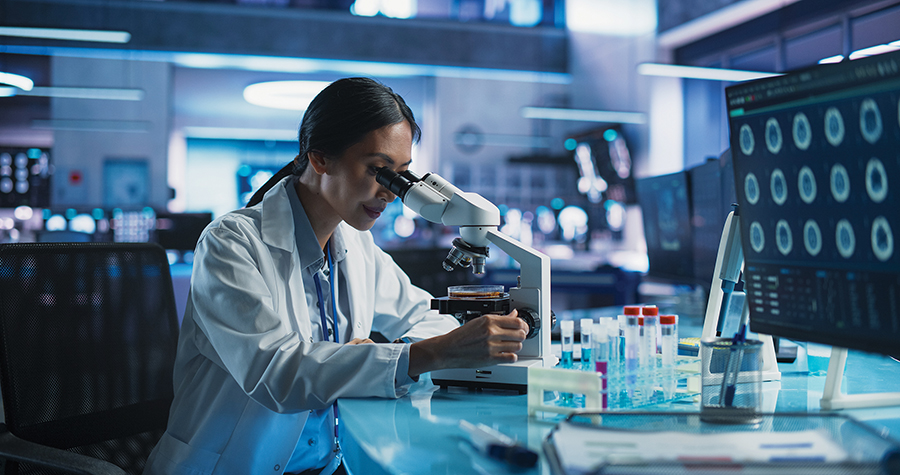
Looking ahead, community health needs will likely focus on addressing chronic conditions that heavily impact West Virginians and the broader Appalachian region. Hammers emphasizes that Marshall University and Marshall Health Network are committed to tackling significant health challenges such as obesity, diabetes, gerontology, addiction and rural health, what they refer to as their “centers of wellness.”
“Our collaborative efforts in addiction medicine over the past five years have earned Huntington the designation of ‘City of Solutions,’” Hammers explains. “By investing in our centers of wellness, we are better positioned to further collaborate on comprehensive, community-wide solutions that lead to healthier outcomes and improve quality of life.”
Hammers predicts the next 35 years will see great advancements in health care including:
- Artificial intelligence (AI) will revolutionize health care by enhancing diagnostic accuracy and disease detection. A current clinical trial at Marshall is using AI to reduce the risk of missed polyps during colonoscopy procedures.
- Advances in genomics and biomedical research will also lead to more precise treatment options.
- Projected shortages of health care professionals will pose a critical challenge.
Brad Smith President of Marshall University
If there’s anyone who understands that the future of Huntington and Marshall University are inextricably linked, it’s Brad D. Smith. The man who worked his way up to the CEO position at software giant Intuit in Silicon Valley before retiring and becoming Marshall’s 38th president is both a Kenova native and university alumnus.
“Marshall is more than an educational institution,” says Smith. “It is a prosperity platform, and we only succeed because we work closely with our city, our health care system, the Chamber of Commerce and the state. Our goals are to do three things: accelerate the success of our students, faculty, staff and the citizens in this community; accelerate innovative ideas; and accelerate economic development.”
“A university is like a garden. You don’t want to simply keep adding more and more. You must prune and, sometimes, replace what you have,” Smith explains.
Because of the collaboration between Marshall and other businesses and organizations, the state’s efforts to foster a supportive environment for startups and the work that is being done on the 4th Avenue Innovation District, Smith says he sees Huntington as a place brimming with potential and growth.
“I see a city that is becoming vibrant and is a hub for education, health care and technology,” says Smith. “I think that’s going to catalyze economic growth and also enhance the quality of life for everyone.”
Some predictions Smith has for the future of the university include:
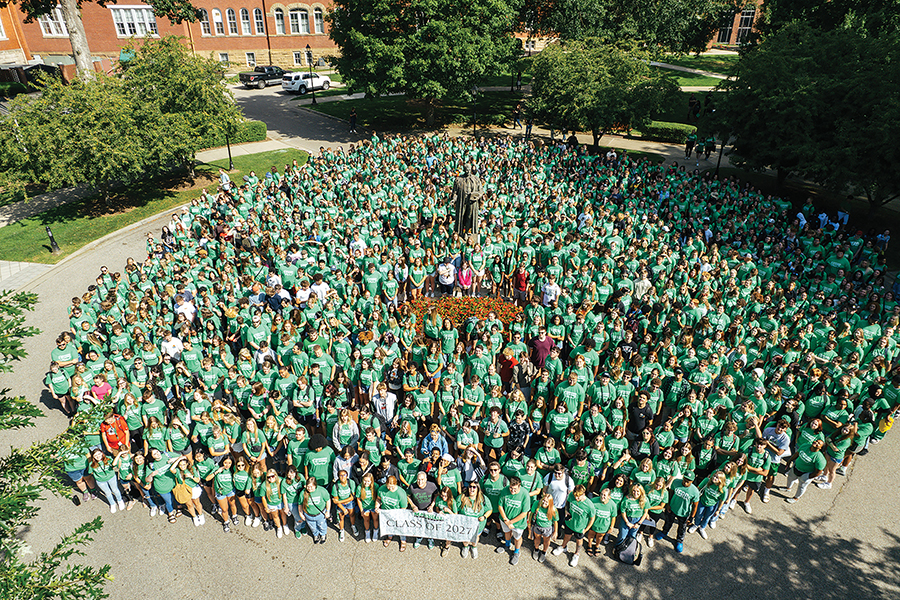
- Despite an “enrollment cliff” that the entire country is facing due to 15% fewer seniors graduating high school, enrollment will continue to grow with the rest of the community. “And we will do this by adapting our programs to meet the evolving needs of our students and the job market,” explains Smith. “In addition, we are committed to our ‘Marshall for All’ program that allows our students to graduate with no student loan debt. By eliminating those financial barriers we’re going to continue to fight the headwinds and grow.”
- Tuition increases will be minimized by seeking alternative revenue streams. “I think it’s important that we’re committed to growing students, not fees,” Smith asserts.
- Current programs will be updated with newer techniques or technologies for 21st-century jobs, particularly those that make up the university’s six areas of distinction.
- Marshall’s campus will continue to evolve and adapt; however, it isn’t entirely about expanding the brick-and-mortar. It is also about online and hybrid education. “Imagine our footprint growing virtually, in addition to physically,” says Smith. “I think over 35 years, we’re going to see both of those occur.”
- Job opportunities in the region will “expand significantly” through programs designed to keep graduates in state while also attracting others to relocate to West Virginia.