Huntington author Marie Manilla writes to callenge stereotypes and reveal the rich, complex reality of life in West Virginia.
By Dawn Nolan
HQ 132 | WINTER 2026
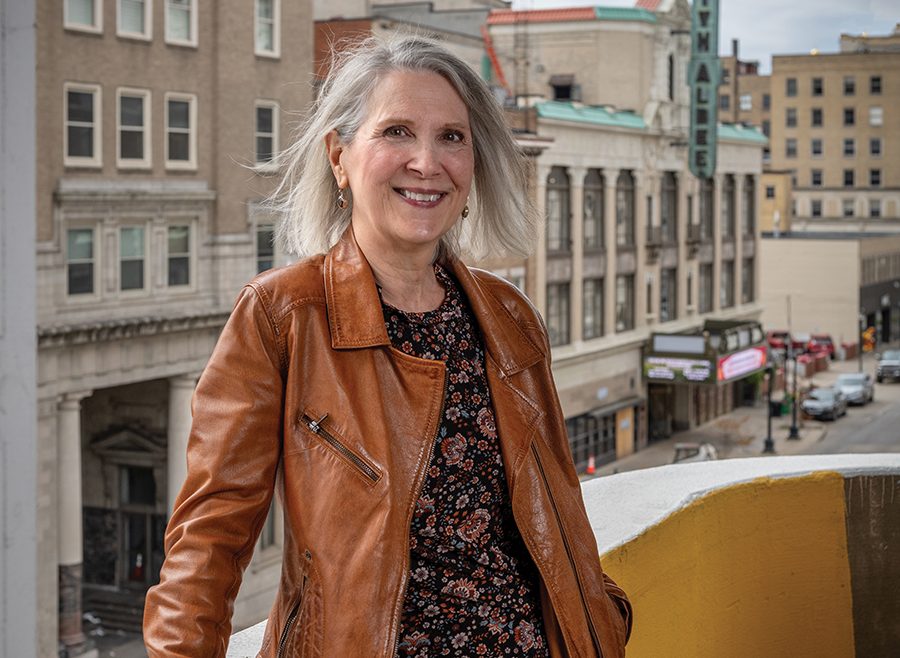
Born and raised in Huntington, author Marie Manilla describes herself as an “urban Appalachian.” It’s a label that she wears proudly, one that defines her personal identity and sense of place as well as her creative purpose.
“Many people outside of West Virginia or Appalachia think that we are insulated from what’s going on in the rest of the country, but we are not,” Manilla said. “One of the goals of my fiction is to present a fuller picture of West Virginia and Appalachia to people who are not from here, and that’s been the mission of my work — to present that urban Appalachian experience.”
It’s a perspective that’s been largely missing in the region’s literature, she added.
“Don’t get me wrong, I love reading about rural Appalachia, but that’s not what I’ve experienced,” she said. “By presenting a fuller portrait of who we are, I’m able to share what I know.”
Raised in Huntington’s Gallaher Village neighborhood, Manilla is the granddaughter of Italian immigrants who came to West Virginia in the early 1900s. Her father worked at the nickel plant, and her parents were founding members of Our Lady of Fatima Catholic Church. She attended both Our Lady of Fatima Parish School and St. Joseph Central Catholic High School.

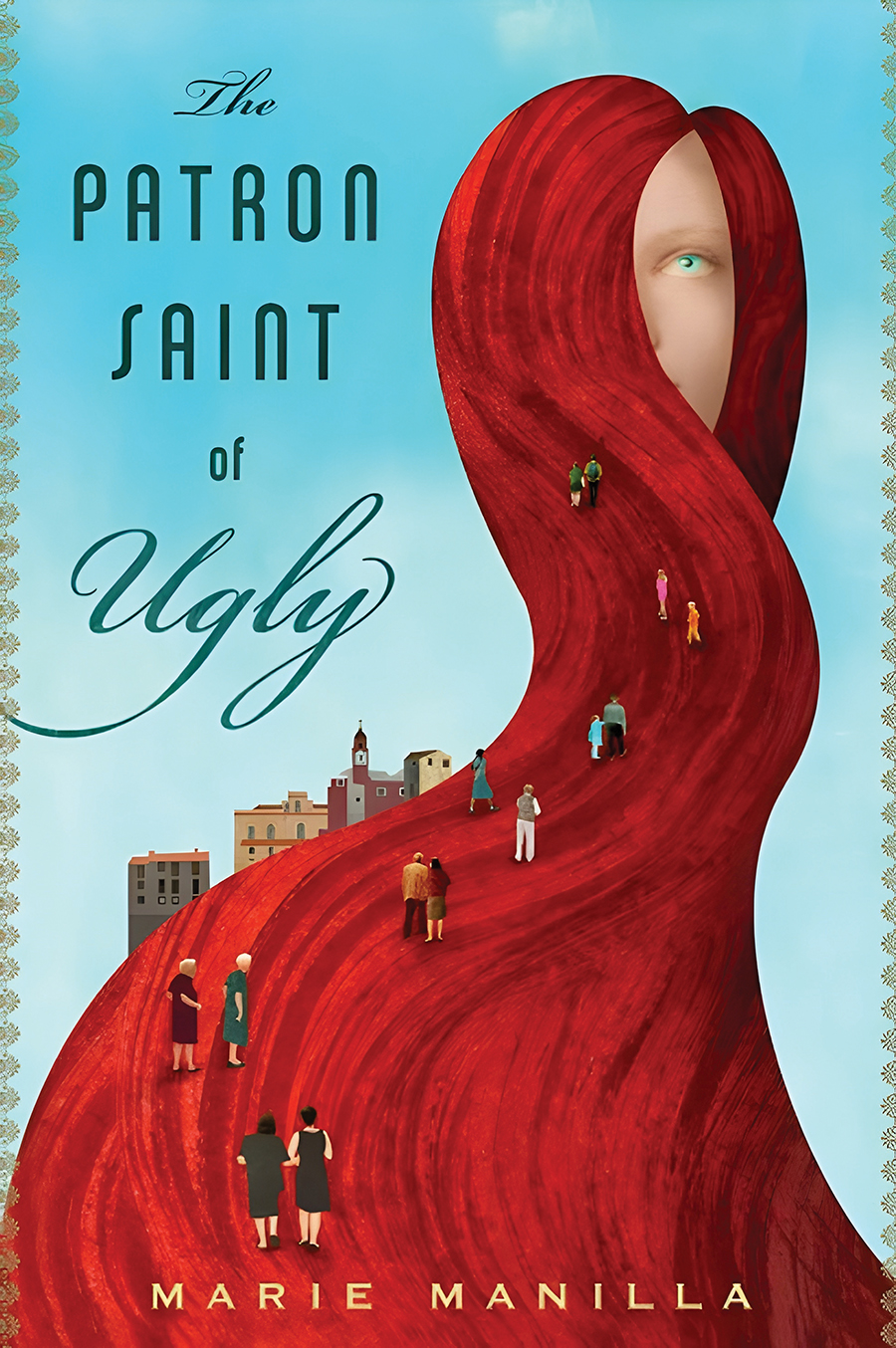
“I actually put a lot of my childhood into my fiction,” she said. “My novel The Patron Saint of Ugly, for example, is set in a fictional version of Gallaher Village, in the very same house that I grew up in, with references to the pharmacy, movie theater and library I would go to and the Catholic church and school I attended.”
Manilla first left Huntington to attend West Virginia University. After earning a degree in graphic design, she moved to Houston, Texas, for her first job as a graphic artist.
“I was a late bloomer as a writer,” she said. “I was a visual artist. That’s where my creative energies went.”
However, she became a voracious reader, falling in love with short stories.
“I remember reading a story one day in a big-time magazine, and I thought — and this is me being really smug — that it wasn’t very good, and that I could write, too,” Manilla recalled. “So, I tried my hand at writing one. The story was terrible, but it was complete. I was hooked from that moment on.”
After taking some classes at the University of Houston, where she received encouragement from the faculty, Manilla realized writing was her new path in life. She returned home to Huntington after seven years in Texas to pursue her master’s degree in English at Marshall. It was there that her thesis director, Richard Spilman, urged her to apply to the prestigious Iowa Writers’ Workshop. She applied and was accepted.
“I won’t lie; it was terrifying,” she said. “I had serious imposter syndrome. But I learned so much about crafting stories — about trusting my gut, about knowing when something’s working and when it’s not. It was so valuable.”
After her father passed away, Manilla returned once more to Huntington, where she met her husband, Don Primerano. She has called the city home ever since.
Manilla’s experience at the Iowa Writers’ Workshop opened doors to teaching, a career she pursued off and on at Marshall from 1994 to 2011 and at West Virginia Wesleyan College while continuing her own writing.
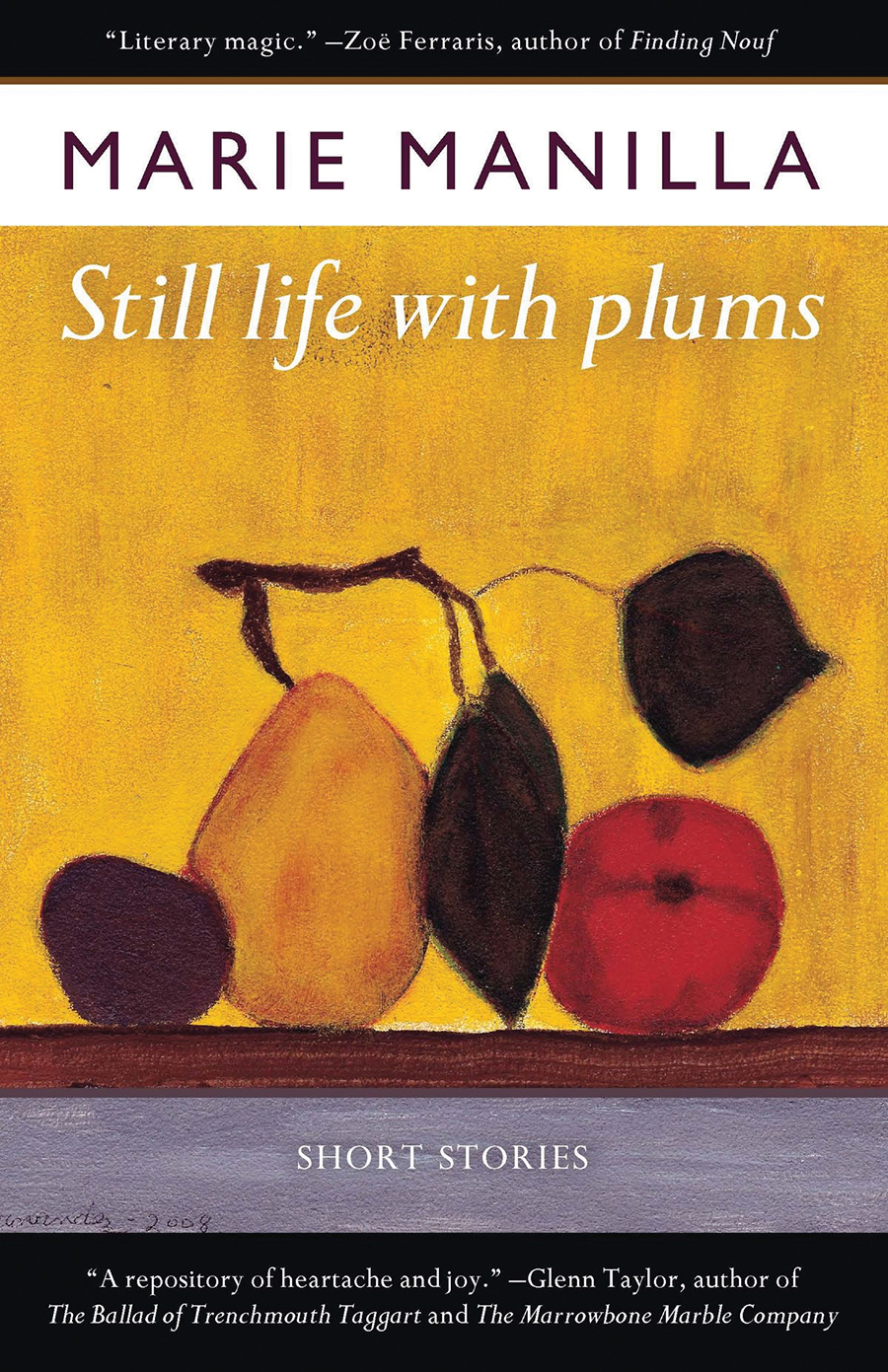
Her first book, Still Life with Plums: Short Stories, was published by West Virginia University Press in 2010. It was a finalist for both the Weatherford Award and the ForeWord Reviews Book of the Year.
“For the first 10 years of my writing life, I wrote exclusively short stories. When I had enough published in good journals, I put together a collection and sent it to WVU Press,” Manilla said. “They took it, which made me very happy. That really helped get me started.”
With one book published, Manilla began another short story — until her writing group told her what she was actually working on was a novel.
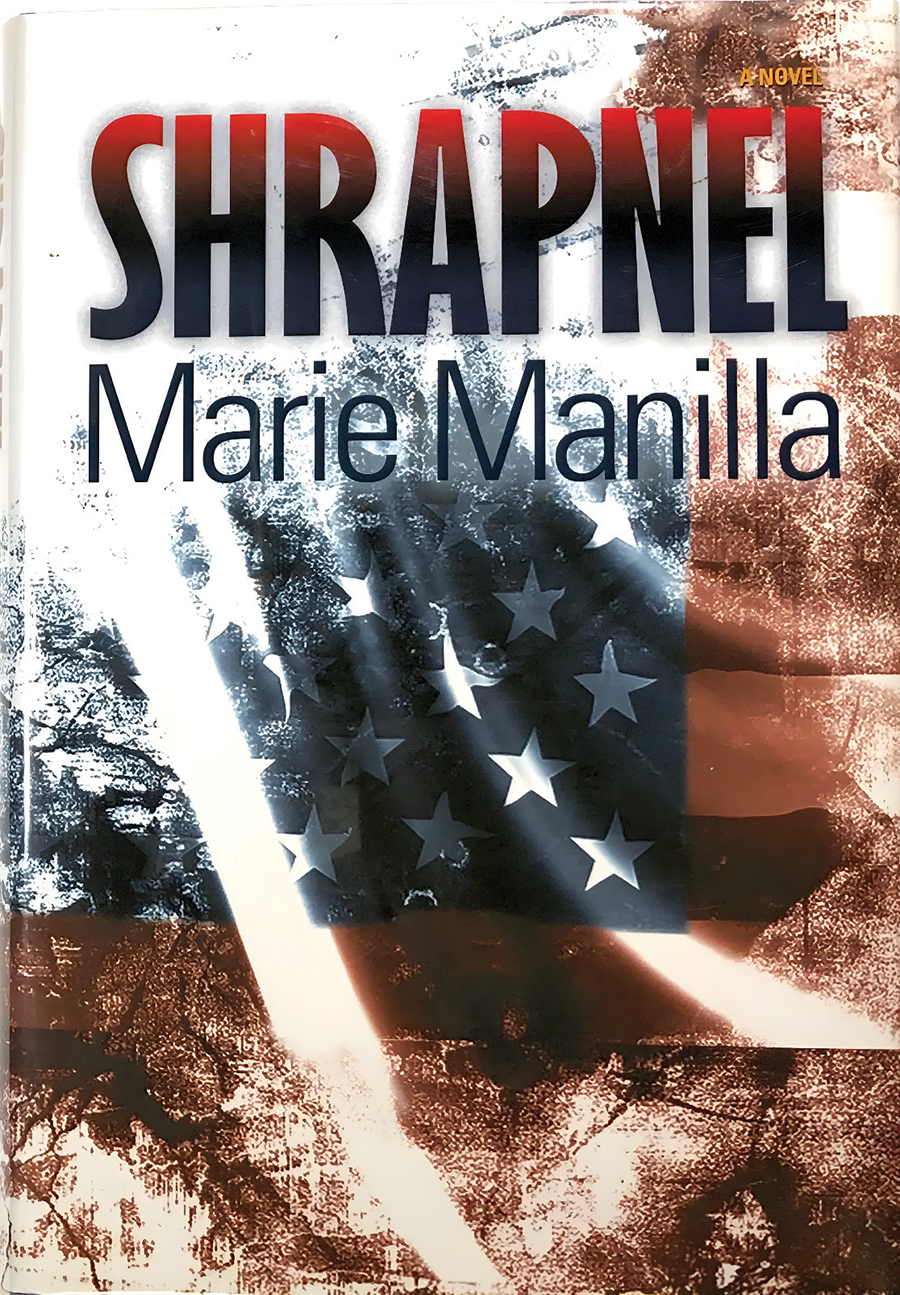
“I was like, ‘Oh, crap!’” she said with a laugh. “I wasn’t a novelist — I was a short story writer. But they were right. It was the first chapter of Shrapnel.”
Written as a response to the West Virginia stereotypes she encountered in Texas, Shrapnel tells the story of a Texan who moves to Huntington to live with his daughter, a professor at Marshall.
“His head is filled with all of these stereotypes, and throughout the novel I address them,” Manilla explained. “Some of them I knock down, and some of them I confirm.”
Readers might pick up on local references like Cam’s Ham, Davis’ Place, the viaducts and Chi-Chi’s, among others.
“I had a lot of fun setting it here and presenting a fuller portrait of who Huntingtonians are to outsiders,” she said.
Being new to novel writing, Manilla took an unconventional approach to the process.
“I kind of cheated — I wrote each chapter as a short story and cobbled them together,” she explained. “That’s how I tricked myself into writing a novel.”
Shrapnel won the Fred Bonnie Award for Best First Novel, judged by Big Fish author Daniel Wallace.
“That really gave me confidence,” Manilla said. “Once that came out, I knew I wanted to write The Patron Saint of Ugly. I didn’t know what it would be called, but I fully knew what it would be about.”
Inspired by the port wine birthmarks on her hand and wrist that she thinks look like North and South America, The Patron Saint of Ugly is an exploration of Manilla’s Italian heritage and her first foray into magical realism.
“I love magical realism, but it’s really hard to pull off,” Manilla said. “I had to wait until I felt like I was mature enough as a writer to try it. It’s probably my most autobiographical book — I modeled some of the characters after my uncles and our family dynamic.”
The Patron Saint of Ugly, which offers a candid look at unrealistic beauty expectations for women, earned the Weatherford Award in 2014 and was chosen as the One Book One West Virginia Common Read in 2021.
“I was really, really happy, because I love that novel,” Manilla shared. “In all of my work, I like to address issues of race, class, gender and beauty ideals, as well as what it means to be West Virginian. Those are the topics I return to again and again and again.”
During the COVID-19 pandemic, Manilla began writing essays.
“I just felt like I needed another genre to explore,” she explained, crediting West Virginia Poet Laureate Marc Harshman and editor Abby Freeland of the University Press of Kentucky for giving her the push she needed to take those essays and shape them into a memoir.
That work, This Is a Game I Play: A Memoir, will be published next year by the University Press of Kentucky.
“When I was writing and collecting these stories, my guiding principle was the games that I played and the games that we all play — the games we play when we are desperate, the games we play to wound people, the games we play just to survive,” Manilla said.

While Manilla describes the work as a “love letter to Huntington,” with a lot of places that local readers will recognize, she doesn’t shy away from tough topics.
“It’s about my growing up here, and part of it is about the dangers of growing up a girl in urban Appalachia, or just anywhere,” she said. “It’s also those issues of race, class and gender that I love to explore. I talk about the opioid epidemic, and I talk about poverty — the haves and the have-nots. I get to champion what it means to be an urban Appalachian here. So yeah, I’m really excited about it. I never thought I’d have a collection of essays out there, and yet here we are.”