
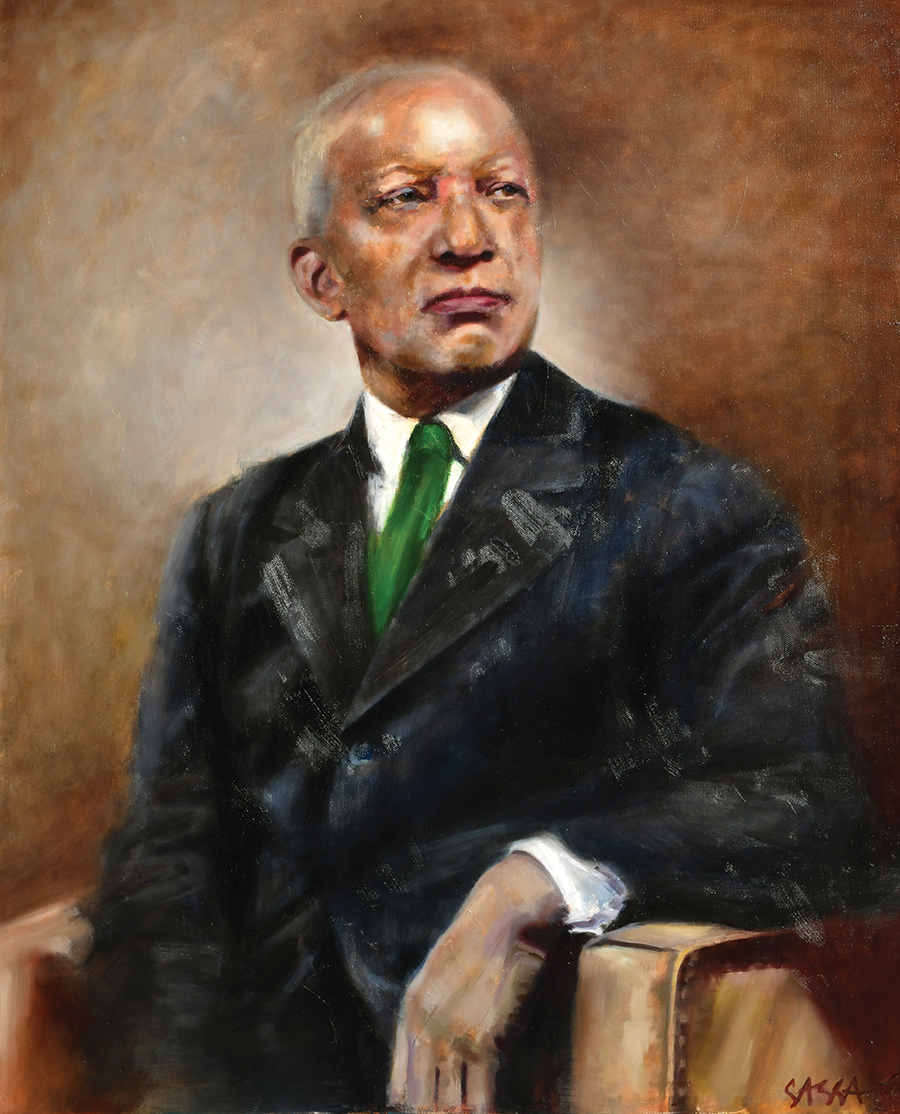
Marshall and Huntington mark 100 years of Black history and the enduring legacy of Dr. Carter G. Woodson.
By Angela Henderson-Bentley
HQ 133 | Spring 2026
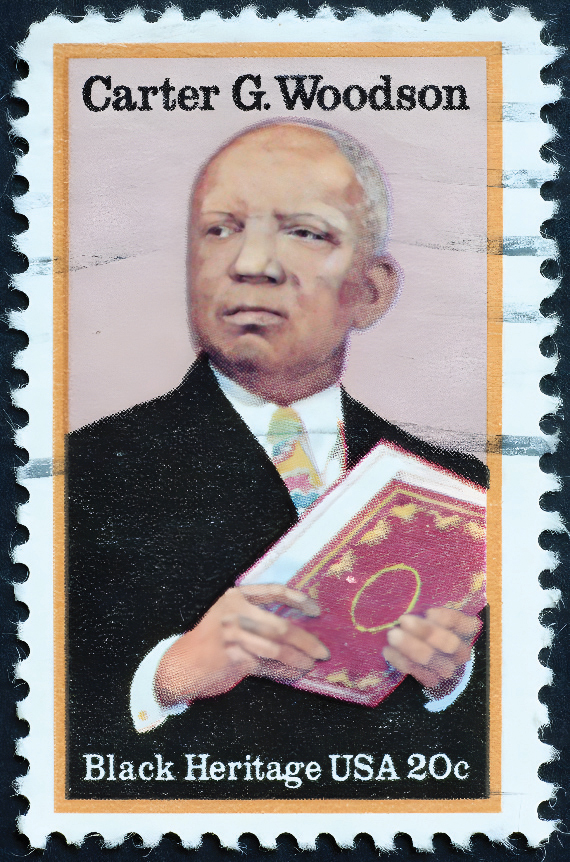
Known as the “Father of Black History,” Dr. Carter G. Woodson dedicated his life to the study and dissemination of Black history, believing that educating the public on the contributions and achievements of Black people could lead to a less prejudiced society.
“He was a leader of a knowledge movement,” said Burnis Morris, the Carter G. Woodson professor of journalism and mass communications and director of The Dr. Carter G. Woodson Lyceum at Marshall University. “When Dr. Woodson began his research, many people believed that Black people had contributed very little to civilization. He set about changing that.”
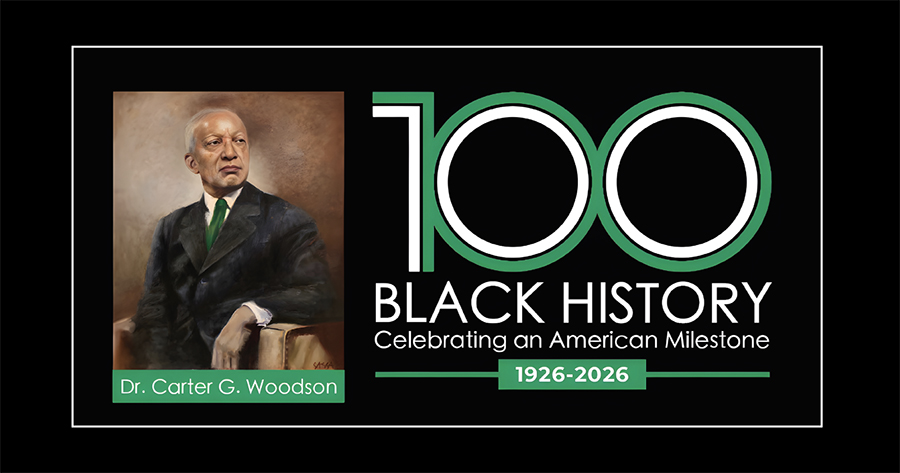
In 1926, Woodson established Negro History Week, which later expanded into Black History Month. It’s celebrated each year in February across the United States as well as a growing number of countries around the world. To commemorate the centennial anniversary of the observance, Marshall University, in collaboration with the City of Huntington and Marshall Health Network, presented “An American Milestone: The Centennial of Negro History Week/Black History Month, 1926-2026,” a series of events celebrating achievements of Black people, as well as Woodson’s legacy.
The centennial celebration was nearly two years in the planning, led by a committee comprising numerous community leaders, historians and other experts and chaired by Morris and Marshall University President Brad D. Smith.
Morris said it was important to involve the entire Huntington community in the celebration, given that Woodson himself once called the city home.
“You wouldn’t guess that the leader of the most significant Black intellectual movement, the Father of Black History, grew up in Appalachia,” Morris said.
Woodson was born in Virginia, but he and his family moved to Huntington in search of more education and employment opportunities. He graduated from Douglass High School in Huntington, later becoming the school’s principal. Woodson went on to serve in a number of other academic positions in both public schools and higher education, becoming a mentor to many young history doctoral students in the early 20th century. In 1915, he founded the Association for the Study of Negro Life and History, which continues Woodson’s work today as the Association for the Study of African American Life and History.
“It’s important for people here to know about the great things that our citizens achieve and what they can do, not just today, but in the future,” Morris said. “Woodson is a good example of that.”
In the spirit of Woodson’s own Black history correspondence courses, Marshall University offered 34 free online Black history courses throughout February as the centerpiece of the celebration. The non-credit classes, which covered a range of topics, were open to anyone who wanted to learn more about Black history and culture. Course categories included the arts, literature, journalism, Black Appalachia and West Virginia history. As a special touch, registration for the courses opened Dec. 19, the 150th anniversary of Woodson’s birth.
But the events during the “American Milestone” celebration went well beyond education, sharing interesting perspectives on Black history in a number of areas, including the arts, music and science. Art displays at the Marshall University Visual Arts Center, the John Deaver Drinko Library and the Huntington Museum of Art showcased posters and art celebrating Black history. Smith held a fireside chat with John Hope Bryant, the founder, chairman and CEO of Operation HOPE, the nation’s largest on-the-ground financial literacy and economic empowerment nonprofit. And music from the most nominated movie in Oscar history, Sinners, filled the Joan C. Edwards Performing Arts Center with a performance by Rising Stars Fife and Drum Band.
The celebration continues into March with “An American Milestone Symposium.” The symposium runs March 5-7 and features presentations from leading Black history scholars, as well as the winners of the centennial poster and essay contests. Dr. Bertis English, editor of The Journal of African American History, will present the symposium’s lunch program on day one, titled, “Looking Backward While Moving Forward: Carter G. Woodson and the Development of The Journal of African American History.” Woodson founded the journal, which is widely considered the most respected journal of Black scholarship.
Another highlight of the symposium will be a free concert by Dr. Ollie Watts Davis and the 20 members of the University of Illinois Black Chorus titled, “Yet with a Steady Beat: The Sacred Music of Black Americans since 1619.” The symposium will conclude with a special banquet at 21 at the Frederick in downtown Huntington.
In addition to celebrating the centennial of Negro History Week/Black History Month, “An American Milestone” is also meant to continue Woodson’s work and increase the momentum of his ideas, something Morris said is still very important 100 years later.
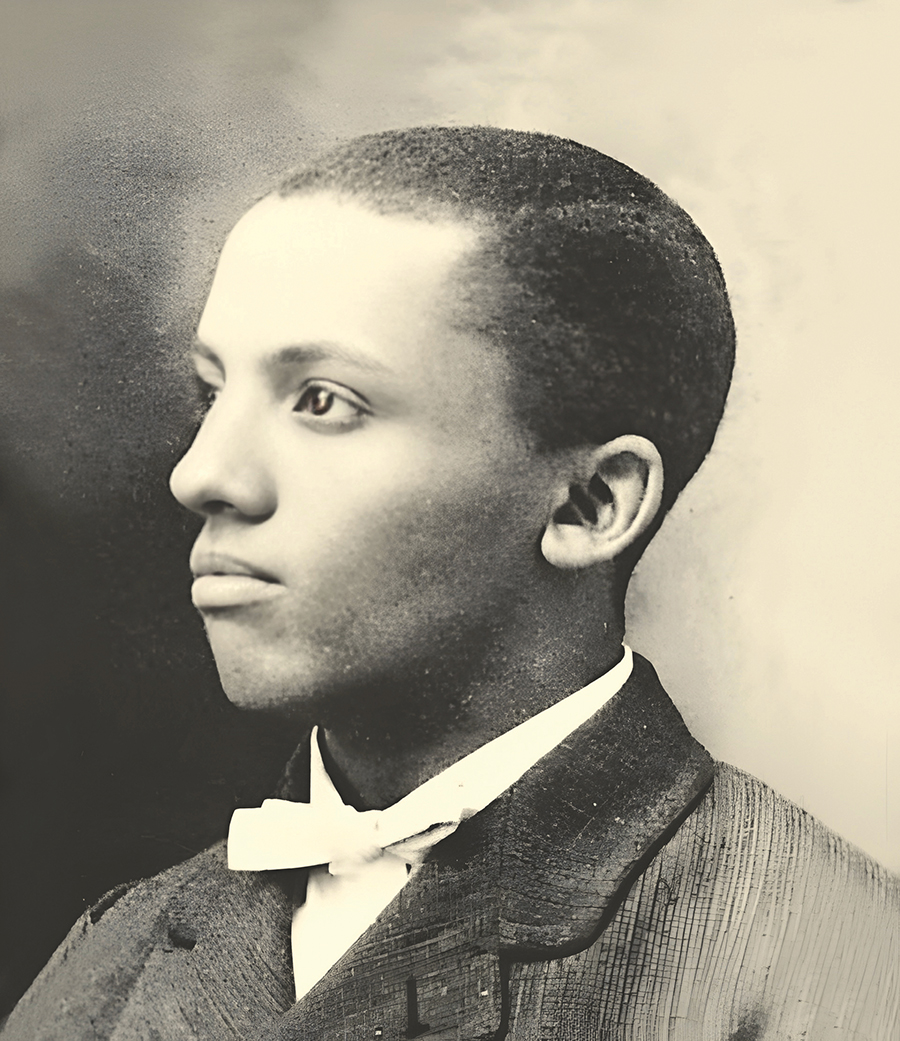
“You would think with all the technology and the rise in educational attainments that we would know so much more about Black history than we do,” Morris said. “As a community and as a nation, we still know very little. People can say, ‘Somebody discovered something,’ but they don’t know the significance of it and how it is connected to the overall history. And that’s the kind of thing that we want to change.”
Morris said it’s important to remember Woodson’s contributions as well.
“There are many people who don’t know his name, because he was promoting the entire discipline and not himself,” Morris said. “Most people who have heard of him know he is considered the Father of Black History, but they can’t tell you why. We want people to have a deeper understanding of the history as well as knowing who Dr. Woodson was.”
To learn more about the symposium and the work of The Carter G. Woodson Lyceum to reconnect the community with Woodson’s legacy, visit www.marshall.edu/woodsonlyceum.