

They’re not easy to find, but these wines that date back to ancient times are certainly worth seeking out.
By Matthew DeBord
HQ 133 | Spring 2026
Over the summer, I read Emily Wilson’s remarkable translation of The Odyssey and got reacquainted with the ancient tradition of wine in Greek culture. While wine wasn’t invented in Greece, it certainly shaped the history of the place. And of course, it is all over Homer’s epic poem about the long return home of the Ithacan king, literally being drunk constantly and metaphorically shaping how the verses describe Odysseus’ bygone realm: the famous “wine-dark sea,” a description that is oft-repeated.
I visited Greece a few years back and am a big fan of the place (everyone should try to go once, if they can, and check out Athens at least). And like anyone else who has consumed his fair share of wine, I’ve encountered a few contemporary bottles from the country. Lately, I’ve been enjoying an innocuous white that’s sold at a wine store near my house.
So for this column, I’m going to adopt the stance of a more-or-less newcomer, given that Greek wine remains limited and hard to find in the U.S., but it certainly is worth seeking out. You can track down both reds and whites online, and the wines of Greece are actually quite integrated with the country’s cuisine. My goal, then, will be to give you a general sense of what Greek wine is all about so you can make your own adventures.
But first, a word about retsina, which might be a type of Greek wine you’ve already heard of. This was the country’s most famous wine internationally for many years, but although its origins probably date back thousands of years, it should be skipped. Essentially, it’s a cheap white wine that’s been spiked with pine resin, which overwhelms the wine. It tastes like what you’d think a cheap white wine flavored with … pine would taste like. In short, not good. Trust me, you can do better.

You might also have heard of ouzo, but that isn’t really a table wine, either. It’s Greece’s version of the anise-flavored drinks that are popular throughout Europe. Ouzo is fun to drink occasionally, but the country offers much more.
Getting into Greek wine, an interesting place to start is with the reds and whites of the Naoussa region. They’re pretty easy to track down online, and prices range from about $20-$35. Naoussa is in Macedonia, which is north of the sun-splashed, touristy Greek islands. The climate yields reds produced in a lighter, more sophisticated style that are sometimes compared with northern Italian reds. The key grape variety is one called Xinomavro, and get used to these offbeat grape names: we are no longer in the land of Chardonnay and Merlot. Don’t get too hung up on the producer; if a Naoussa red has been exported, it’s probably of a relatively high quality.
Moving along, another region that you’ll want to explore is Crete, where the main grape is Liatiko. Ironically for a southern region, the wines made from Liatiko are on the lighter side and aren’t very long-lived. That’s fine, of course, and they’re meant to be drunk right away. I think of them as being a bit like so-called “village” Burgundies in France — nothing too fancy. This is a wine of decent flavor and acidity that pairs well with various grilled meats and even fish.
The whites of Crete are made mainly from Vidiano, and they’re arguably better than the reds. The flavor profile is richer, sort of like a modest Chardonnay crossed with Sauvignon Blanc. An excellent choice if you’re planning a dinner featuring typical Greek fare, such as octopus, anchovies and a variety of dips, olives and feta cheese.
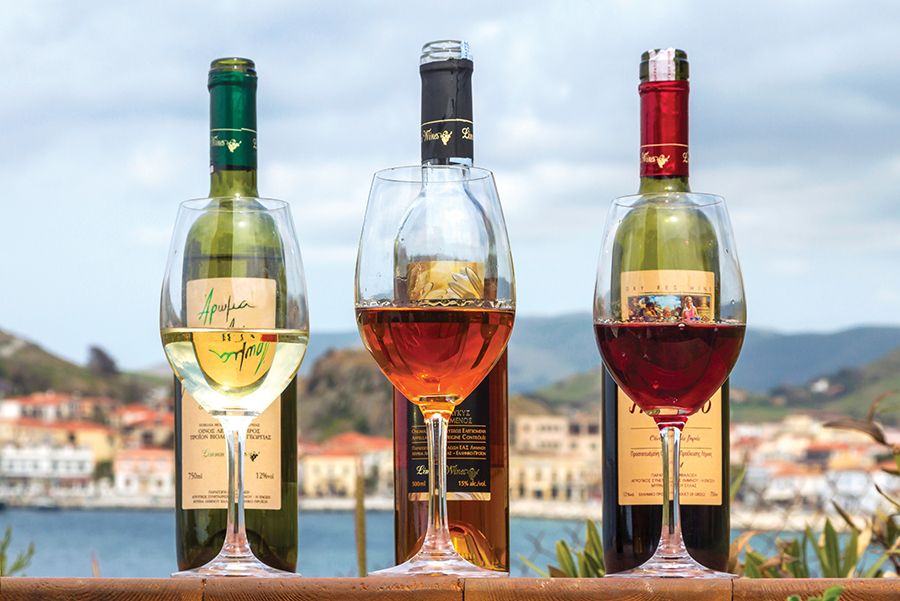
Finally, let’s head to the famous Greek island of Santorini and take a look at Assyrtiko, a grape that is made into a rather austere white wine. Nevertheless, the restraint and acidic-mineral flavor profile is kind of the point — it makes the wines some of the more sought-after among people who are “in the know” about Greece’s bottlings. The prices can be steep, but I think they’re worth it. And remember, what we’re doing here is exploring a global wine region that, while historically important, is rather obscure in the current wine world. The truly good stuff is in short supply.
Ultimately, the cool thing about Greek wine is that it isn’t familiar to folks who don’t live in Greece (or nearby European countries) and offers an intriguing alternative to the wines everybody has already heard of. Importantly, wine has been an integral part of Greek culture for millennia, so when you enjoy one, you’re essentially journeying back to ancient times.
Well, to a degree. Modern Greek wines are vastly superior to what Athenians might have quaffed when Socrates was still alive. They are very versatile, as well. You don’t have to limit yourself to drinking them with Greek food because they tend to go quite well with a wide range of dishes. After all, they were developed in a culture that prizes eating and eating well.