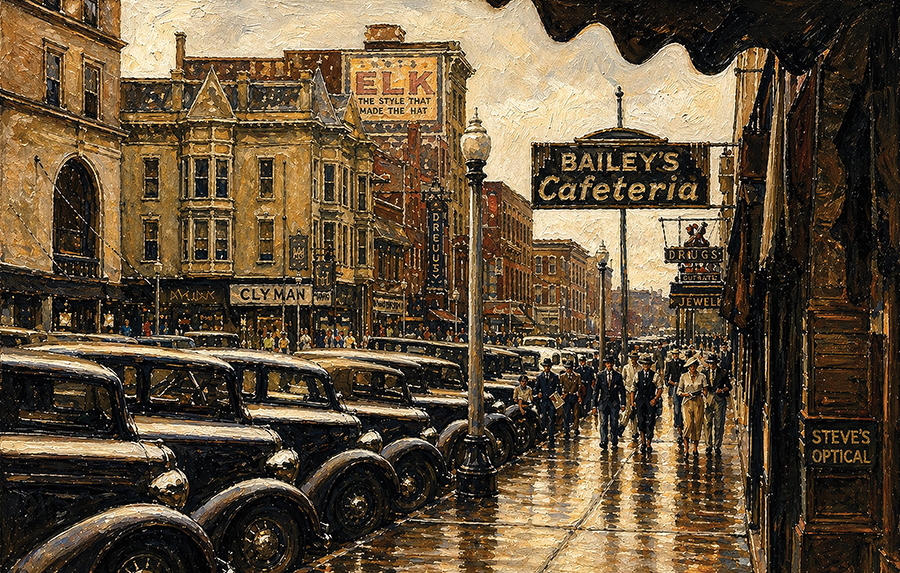
Downtown Huntington’s beloved cafeteria had a loyal clientele for more than 60 years.
By James E. Casto
HQ 134 | SUMMER 2026
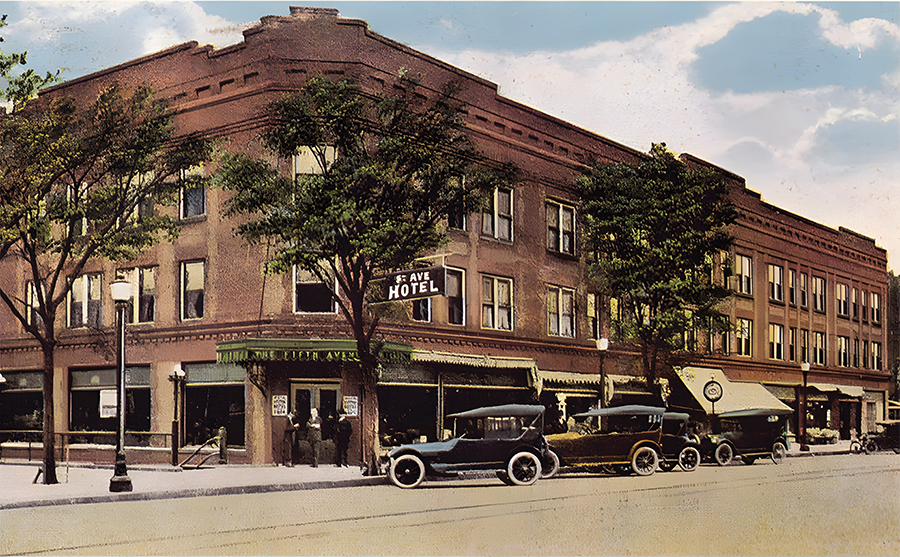
Morris and Sadie Bailey were the couple behind Bailey’s Cafeteria when it opened in 1934. Although they surely had high hopes for their fledgling restaurant, it’s unlikely they realized they were founding a Huntington institution.
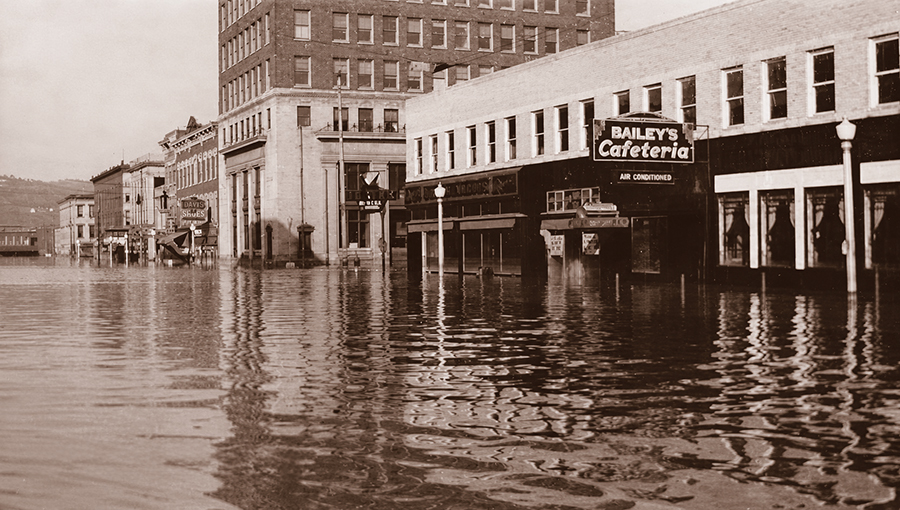
Not long after it opened for business in the basement of the Fifth Avenue Hotel, Bailey’s moved to a new location on the east side of the 400 block of Ninth Street.
The move came just in time for the cafeteria to be visited by the record-setting 1937 Ohio River flood. Undiscouraged, the Baileys cleaned up the muddy mess left behind by the receding floodwaters and reopened. The cafeteria would go on to be a fixture on Ninth Street for more than 60 years.
When Morris and Sadie Bailey died, their son, George Bailey, took over the business. His cousin, Floyd Walker, joined him as a partner and became sole owner when Bailey died in 1966. Barry Smith, who started his restaurant career washing dishes at Bailey’s as a high school student, bought the business from Walker in 1990.
At the height of its popularity, Bailey’s had a clientele so loyal that some people ate there nearly every day, patiently waiting their turn in line to make their selections, then following a uniformed waitress to a table, where she’d set down their tray and pour water from one of the colorful Blenko bottles placed on each table.
Many customers had regular tables they shared with friends and colleagues as they enjoyed a menu that varied little over the years. Fried chicken, stuffed pork chops, country steak and gravy and, of course, the mouthwatering homemade pies were customer favorites.
Longtime patrons of the popular restaurant learned that if they were planning on enjoying a tasty lunch or dinner there, it was always a good idea to arrive a bit early. Otherwise, they could face a seemingly endless line of folks awaiting a table.
Youngsters loved it when the family went to Bailey’s. Waitresses would bring baskets of colorful toys to tables where children were seated, and each child could pick out a free toy to take home with them. Other curious youngsters couldn’t take their eyes off the dumbwaiter that carried used food trays from the dining room down to the kitchen in the basement. “How does that work?” they would ask.
But each year saw the cafeteria’s loyal customers getting older and fewer. Despite its best efforts, Bailey’s seemed unable to attract younger customers. That fact, combined with a general decline in downtown business, ultimately forced it to close in the late 1990s.