
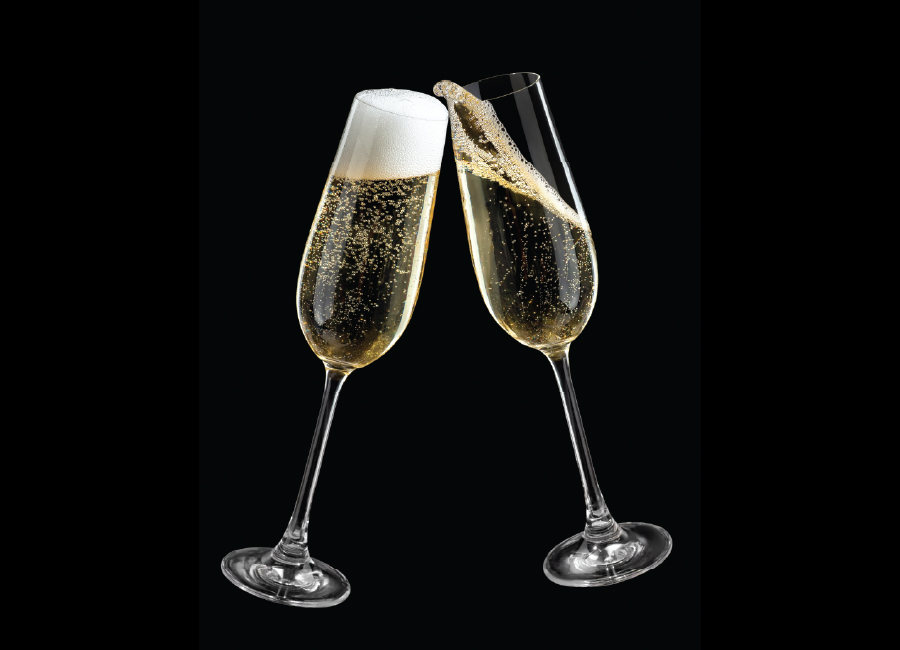
When it comes to sparkling wine, there’s a great big world outside of the Champagne region of France.
By Matthew DeBord
HQ 135 | AUTUMN 2026
When most people think of bubbly wine, one word pops to mind: “Champagne.” That’s understandable because Champagne is synonymous with sparkling wine for, well, just about everybody. But it’s important to remember that Champagne is a lot more than just bubbles — it’s a specific region in France, east of Paris, located in one of the most marginal grape-growing climates in Europe; and it’s the embodiment of a winemaking approach.
The bottom line is that only sparkling wines produced via this “traditional method” and hailing from the legally recognized region get to carry the “Champagne” name. Of course, Champagne isn’t the world’s only sparkler. So, what’s the story with these other players?
For many decades, the story was that sparkling wine produced outside of Champagne wasn’t all that great. But then again, it wasn’t trying to be. The big Champagne houses, as they are called in France, gather up all the glory. Think Dom Perignon or Taittinger or any other name brand you’ve heard of before. These houses are rightly famous because they have always produced a superb product.
A funny thing happened over the past 30 years or so, however. The rest of the world woke up to how much people like to drink bubbly and commenced to improve their own local quaffs. Nowadays, you can remain devoted to your favorite Champers while still having lots of other interesting and often more affordable sparklers to choose from.
Here’s an opinionated international rundown of options for those of you who love bubbles. (Spoiler alert: When considering Champagne alternatives, think Spanish.)
Prosecco
This incredibly popular sparkler from Italy has become Champagne’s main competitor. You’re quite likely to be offered a glass of Prosecco at a wedding to toast the bride and
groom, whereas a few decades back you would have surely raised a flute of Champers. Prosecco is now routinely drunk before meals as a cocktail or aperitivo. It’s an interesting development, as Prosecco is not really intended to impress anybody. It’s a basic bubbly, usually showcasing peppy citrus fruit flavors, light-ish body and often a nutty or bitter aspect (Italians like bitter tastes before dining). I’ve never been a huge fan, but it is fun to sip a little Prosecco before lunch, especially if you’re eating outdoors. Quality has greatly improved, but prices have also shot up. I used to see a lot of perfectly OK Prosecco at wine shops for around $10, whereas now I have to spend $13 to buy a bottle that’s very middling in terms of quality, but that does well in an Aperol spritz.
Cava
Much better than Prosecco, in my book, is Cava, Spain’s Champagne rival — literally, in that both Cava and Champers are produced using the traditional method, which entails bottle fermentation to create the bubbles. Not so Prosecco! This means that a decent Cava can provide a reasonable depth of flavor, good texture and decent body. Admittedly, for many years Cava wasn’t exactly produced to a high standard of excellence, but that was once again because Champagne hogged the limelight and Spanish producers saw no point in investing money to up their game. These days, however, Cava has carved out a niche for itself between Champagne and Prosecco. A $20 bottle of Prosecco will be easily outdone by a similarly priced bottle of Cava.
Cremant
This is the wine lover’s secret choice in the world of bubbly. Cremant is made according to the traditional method, but because it’s not from Champagne, it can’t use the name. So, it’s essentially the French sparkler that isn’t Champagne but often tastes just as good. It’s made with prestigious grapes (like Pinot Gris and Pinot Noir) and doesn’t cost as much. Mind you, if you show up at a wine aficionado’s house with a bottle of Cremant, say from the Alsace region, they’re going to know you didn’t want to pay the Champagne premium, but they’re also going to respect your knowledge. And if you show up at a wine newbie’s house with Cremant, you are going to have an opportunity to do some schooling.
Sekt
I have to throw the German and Austrian sparklers in here because if you’re in a big city and stumble into a really, really good wine store, the proprietor might stock some. It’s worth a try, like most German and Austrian wines. The quality is tremendous, but Sekt producers aren’t aiming all that high — the sparklers are tasty and enjoyable, and the prices are usually pretty low. But Sekt is also rather obscure. It’s worth knowing about if you intend to visit Germany or Austria and don’t want to be confused if you’re offered a glass.
American Sparkling Wine
Controversial opinion: I don’t think much of American sparkling wine. Yes, there are plenty, and yes, they are produced using the traditional method (in some cases). But they’ve never been terribly popular, and as a result they can tend to be a bit pricey for a weaker version of Champagne. You’re better off selecting a good Cava or Cremant. That said, an American bubbly is going to have a very American quality: the fruit will be rich, and the wine will be full-bodied. But, if you aren’t into medium- or light-bodied European wines, and you don’t want to pony up the funds for one of the heavier Champagnes, going American isn’t a bad move.
Australian Sparkling Wine
Most bubbly is of the white or rose type, but Australia is noteworthy for a red bubbly that’s made from Shiraz. It’s dandy stuff, but also something of an acquired taste. Rarely expensive, it can be a pleasant way to finish off a meal, or a fine companion for robust cheese before dinner starts. I generally drink it well-chilled, as a mouthful can become sort of thick if it gets too warm (unlike Champagne, which is a joy to consume at any temperature).
In the end, my recommendation is to check out Cava and Cremant, keep some Prosecco around and experiment with Australian red bubbly. There is indeed a great big world outside of Champagne!
Matthew DeBord is a freelance writer living in Montclair, New Jersey. He is a native Huntingtonian and former associate editor at Wine Spectator magazine. He is the author of several wine books, including The New York Book of Wine and Wine Country USA. He has written for such prestigious publications as The New Yorker, The New York Times, Los Angeles Times and TheWashingtonPost.