The YMCA celebrates 140 years supporting youth, seniors and families in the community.
By Jean Hardiman
HQ 132 | WINTER 2026
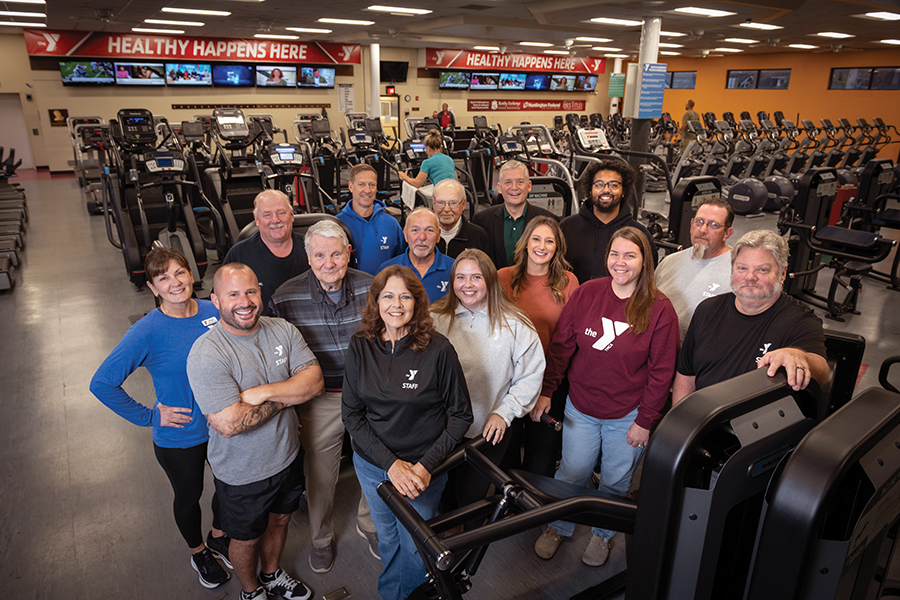
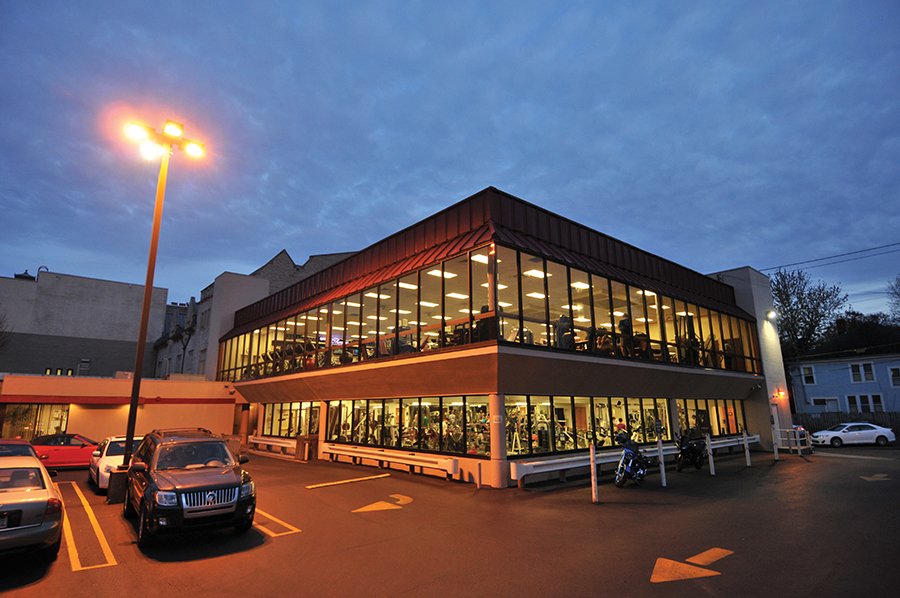
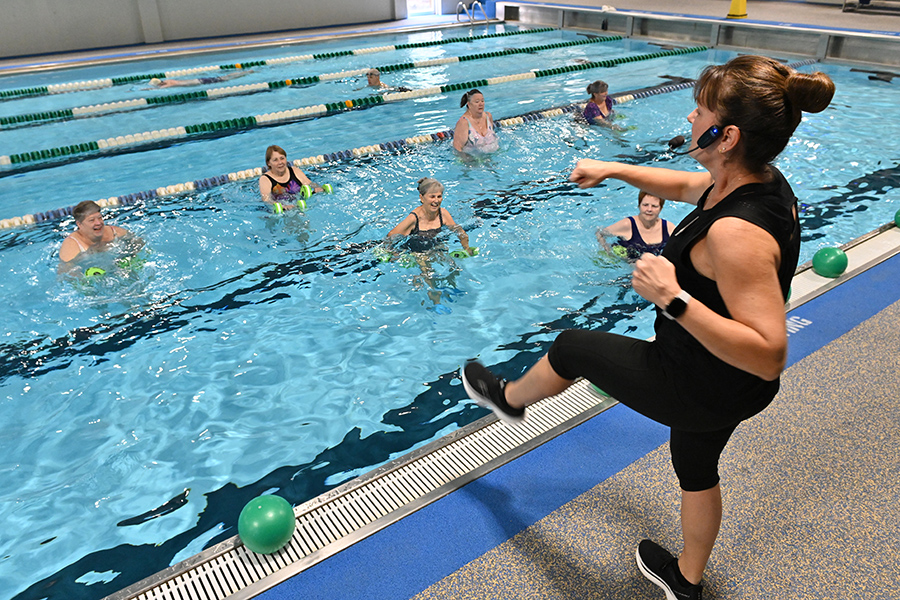
It’s a typical Monday morning at the Huntington YMCA. In the May Building, the swimming pools are sloshing through water aerobics classes; the weight room and fitness center are humming and clanking as members get their morning exercise; and the upstairs group fitness room is lined with members, surrounded by windows that overlook the autumn leaves along 10th Avenue.
One exhausted Y member heads out the door, laughing about how he survived his workout again, barely. Across the street at the Phil Cline Family YMCA building, some retired friends are lined up on exercise bikes, talking while they spin; a gym echoes with country music as a group takes a line dancing fitness class; and Christy Spurlock arrives to teach an exercise class for the visually impaired.

It’s just one small snapshot of an institution that has been dedicated to health and wellness in the Huntington community for almost a century and a half. For some, the YMCA conjures memories of Saturday mornings on the grass soccer fields at the Kennedy Center along Route 2 or Buddy Basketball moments that will be retold in stories for years to come.
This year, as the Huntington YMCA celebrates its 140th anniversary, the organization is as committed as ever to helping community members of all ages stay active and connected.
Every passing decade has brought new interests, challenges and goals for helping the community thrive. Since opening its doors in 1885 to provide lodging for the city’s early railroad workers, the Y has transformed alongside Huntington itself. It became more fitness-focused in the 1900s and has been growing and adjusting to meet the community’s needs ever since.
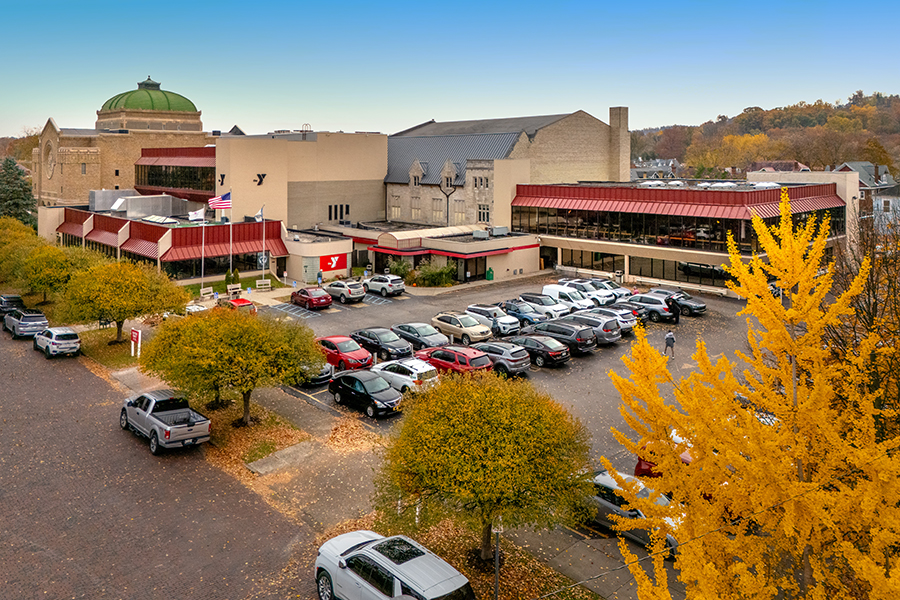
The Y’s current facilities include:
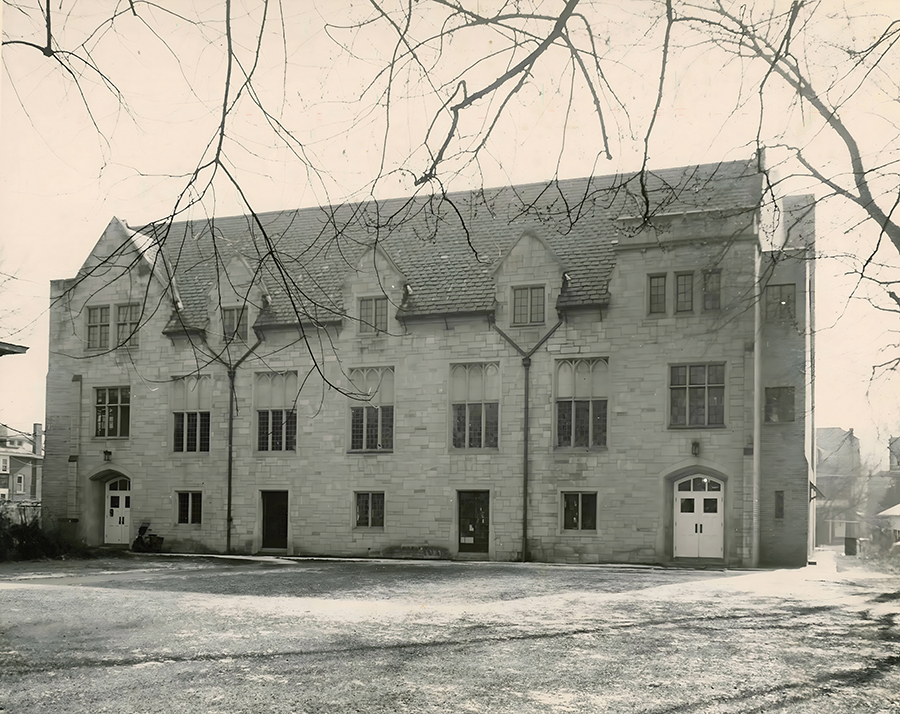
• The May Building, originally the Presbyterian Recreation Building, on 10th Avenue.
• The Phil Cline Family YMCA across the street, which occupies a portion of what was formerly the Huntington High School building.
• The Kennedy Center, formerly the Glenbrier Country Club, which is home to the organization’s soccer fields and outdoor pool.
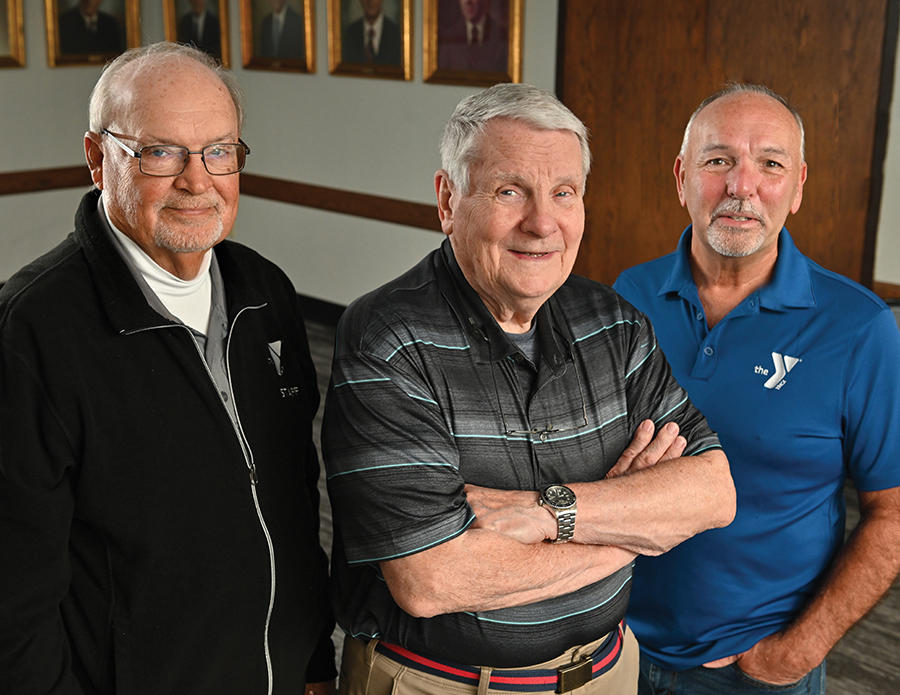
“I always tell people that when they join the Y, they’re not only helping themselves, but they’re helping the community because we have so many mission programs,” said Huntington YMCA CEO Doug Korstanje, noting that in addition to the fitness facilities, pools and classes available to the Y’s roughly 8,600 members, there are programs that serve more than 2,000 youth and more than 2,000 seniors.
Korstanje explained that while memberships help the Y operate, the Huntington YMCA Foundation helps fund the organization’s mission programs. Youth programs include Kids in Motion, basketball, soccer, flag football, track, swimming, the PROPEL summer enrichment program, cheer and volleyball. The Y also provides a child care center for working families. Exercise opportunities for seniors include everything from Silver Sneakers to the Steady Motion program to aqua arthritis classes, yoga and more.
“Our point of pride is that we make sure that everybody can go to the YMCA, regardless of their ability to pay,” Korstanje said. “It’s a nonprofit, mission-driven organization.”
And it’s an exciting thing to be a part of, he added.
“You know every day that there’s a reason that you’re here,” he said. “You’re helping improve the health of the community. You’re helping youth learn about exercise and healthy eating. You’re helping seniors stay active and have a place where everybody knows their name, where they’re welcomed by the staff and by their friends.”
When donors give to the Y, he said, it helps provide for those mission programs as well as for facility improvements. Recent upgrades include all-new LED lighting, $150,000 in new pool and hot tub liners, $150,000 in new weight training equipment and $50,000 in new free weights.
The Y is also $1.3 million into a $4 million capital campaign for new turf soccer fields at the Kennedy Center and a new youth and senior gym complex at the Phil Cline Family YMCA building. When finished, the complex will be used for advanced sports training for young athletes and provide additional gym space for activities like pickleball.
“Dutch Miller stepped up and donated $500,000 to our capital campaign,” Korstanje noted, adding that donations of any size are needed and appreciated.
The commitment and leadership of the Y’s volunteer board of directors is key to the organization, he said. The Y has had 44 board presidents since 1926, including current board president Michael Thomas and immediate past president Sam Miller.
Thomas said he’s proud to serve, recalling his own memories of playing Buddy Basketball growing up.
“I saw the love of the sport of basketball — the love of the volunteers who coached and the volunteers who ran the concession stand,” he said. “It was like a huge family.”
Thomas said he’s long admired the dedication of the Y’s volunteers and leaders — including former director George Smailes, who happens to now be his father-in-law. A middle school football and basketball coach, Thomas first joined the board to make a difference for local youth.
“After getting on the board, I learned how important the Y is to the elderly and the whole community,” he said. “It’s such a pillar in the community, and I felt the need to contribute however I could.”
He rotated into the position of president in May after being elected to the executive board six years ago. Members elected to the executive board each serve two-year terms as treasurer, secretary and vice president prior to serving as president.
Thomas credited his predecessor Sam Miller with leading efforts to position the YMCA well financially after the COVID pandemic. Now, he said, his short-term goals focus on “making the YMCA the best place it can be, as far as being an employer, and making sure we have qualified people in every position who know it’s not just a job — it’s a way of life.”
Thomas’ long-term goals include leading volunteer efforts to support the capital campaign.
“Everything helps, whether it’s a dollar a month or a dollar period,” he said. “I think $5 million will get us what we want, but $6 to $8 million will get us to where it will be the best around.
I am thrilled and honored to be the executive board president for the rest of this year and next year, and I hope that everyone does their part. I’m hoping for big things to come.”