The crown jewel of downtown is brought back to its former glory.
By Katherine Pyles
HQ 134 | SUMMER 2026
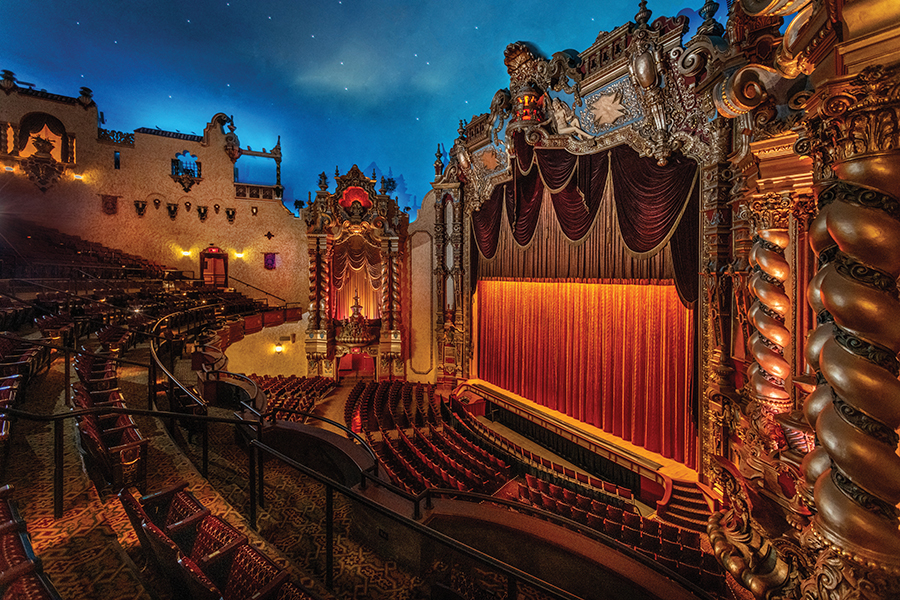
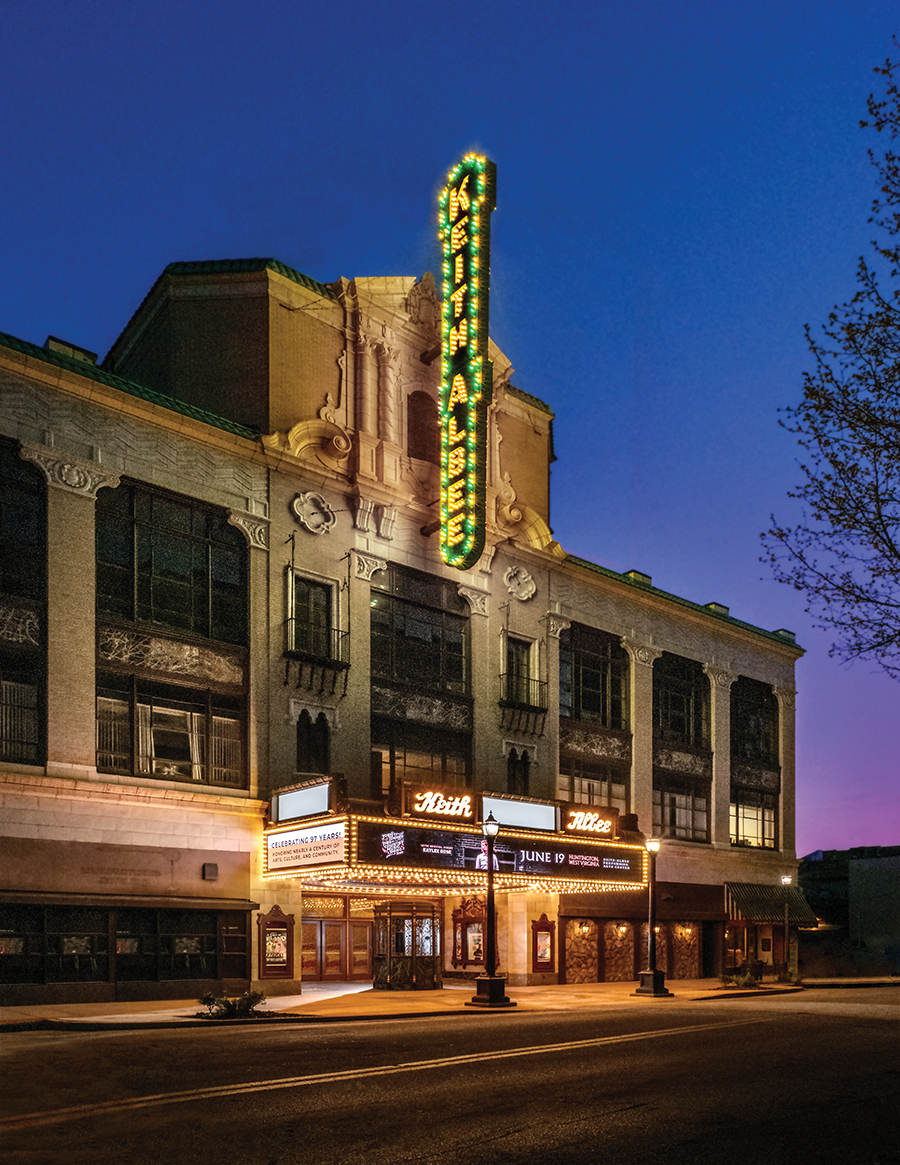
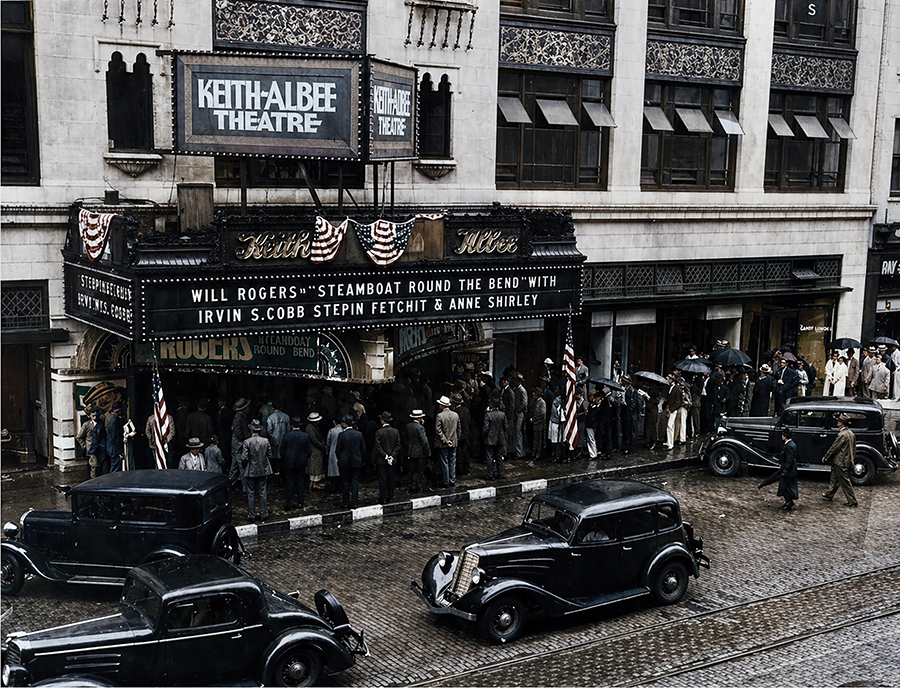
For close to a century, the Keith-Albee has stood as the crown jewel of downtown Huntington — a glittering palace where generations of West Virginians watched first-run films and experienced the magic of live entertainment beneath a painted sky of stars.
Over time, however, the grand auditorium was carved into smaller cinemas, its plaster cracked and seats worn thin as the building aged and audiences dwindled. When Marshall University assumed ownership of the theater in 2006, then passed it along to the newly formed Keith-Albee Performing Arts Center Foundation, many wondered whether the once-opulent Keith was beyond repair.
But not Terry Deppner Hardin.
“There was a group of concerned citizens — led by Bob Plymale — who were absolutely not going to let that building go to the wrecking ball,” recalled Hardin, a former board member who has been the Keith-Albee’s director of development since 2019.
Plymale, who was serving in the West Virginia Senate at the time, helped establish the Keith-Albee as a nonprofit and has led its board ever since, first as co-president and now as president.
“My parents always said, ‘Give back to your community. Make sure that you are giving back to the community that shaped you,’” Plymale said. “When the opportunity arose to save the Keith-Albee, I said I’d lead the effort. Now, I will surely tell you, I didn’t know exactly what that meant. The task was daunting. But would I do it all again? Yes.”
What Plymale and others were working to save dates back to May 7, 1928.
On the day the Keith-Albee opened, it was praised by the Herald-Advertiser as a “temple of amusement,” an architectural and cultural triumph for the city of Huntington. It was one of architect Thomas Lamb’s prized atmospheric theaters, a design concept that sought to immerse audiences in the illusion of an open-air courtyard. Though Lamb designed over 300 theaters around the world, he only created eight in the atmospheric style. The Keith-Albee is the only one still standing today.
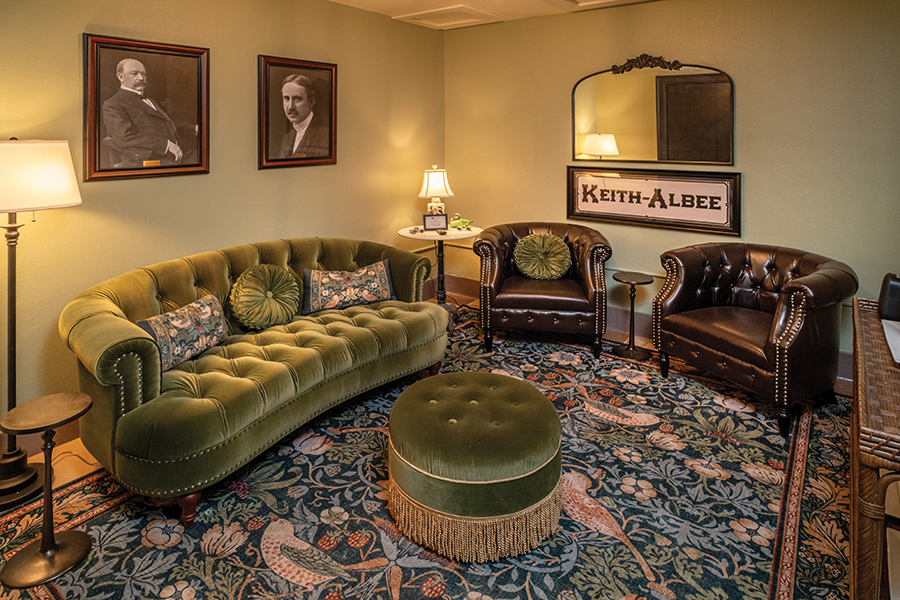
Built by brothers Abe and Sol Hyman, the Keith-Albee was named after Benjamin Keith and Edward Albee, premier vaudeville producers of the time. Vaudeville was an early predecessor of the variety show: a single program might include a comic monologue, a dance number, a trained animal act, a dramatic sketch and a singer, each given just enough time to make an impression before the next act took the stage.
Over the decades, the Hyman brothers’ theater weathered economic hardship, natural disasters and changing cultural trends. It survived the Great Depression and the devastating 1937 flood that submerged much of downtown Huntington.
“The Keith-Albee is a survivor,” Hardin said. “It’s lived through every major moment of the last hundred years, and people have always come here to be together.”
As multiplex cinemas rose in popularity in the 1970s, the Keith-Albee’s 3,000-seat auditorium was subdivided into smaller theaters. Even then, there was hope that the theater would one day be restored to its original grandeur, said Director of Operations Gary Cooper. The Hymans’ changes were made with unusual care, he said, designed to be undone when that day finally came.
Cooper joined the Keith-Albee in 2008 as a stagehand but soon became involved in maintaining the aging building.
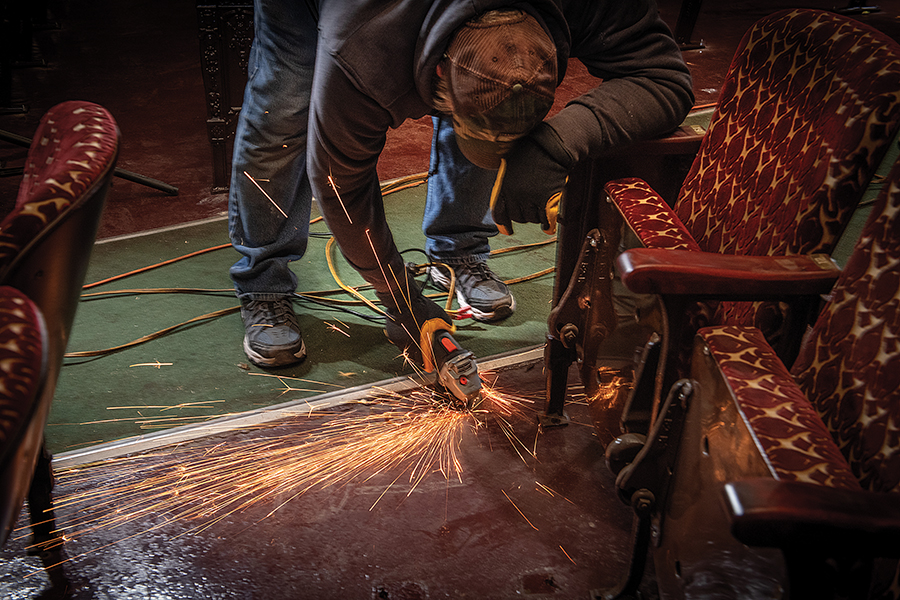
“When I came on board, we were just trying to fix the seats,” Cooper recalled. “They were in bad shape, and we’d do a few here and there as we had the funding. We did almost all the work ourselves.”
Even as the building’s luster faded, the Marshall Artists Series, which formed in 1936 and moved to the Keith-Albee in 1939, never wavered in bringing entertainment ranging from Broadway shows to world-famous comedians to the stage.
“You have to remember that the theater was originally built for vaudeville and silent motion pictures, and by the late 1930s, vaudeville no longer existed,” Plymale said. “The Marshall Artists Series became a major player in utilizing the Keith-Albee as the theater it was always intended to be.”
Eventually, the need for a comprehensive restoration became clear.
“Anything that’s old needs a little bit of attention — I’m old, and I need a little bit of attention,” Hardin joked. “You’ve got to repair the bones sometimes.”
From early campaigns to replace broken seats and repair the iconic marquee to the recent large-scale renovations, the rebirth of the Keith-Albee has been a true community effort, Hardin said. Support has poured in from the City of Huntington; the State of West Virginia; the Appalachian Regional Commission; companies from across the region like AEP and Marathon Petroleum; and private donors, including Marshall President Brad Smith and his wife, Alys, who pledged $1 million toward the renovation.
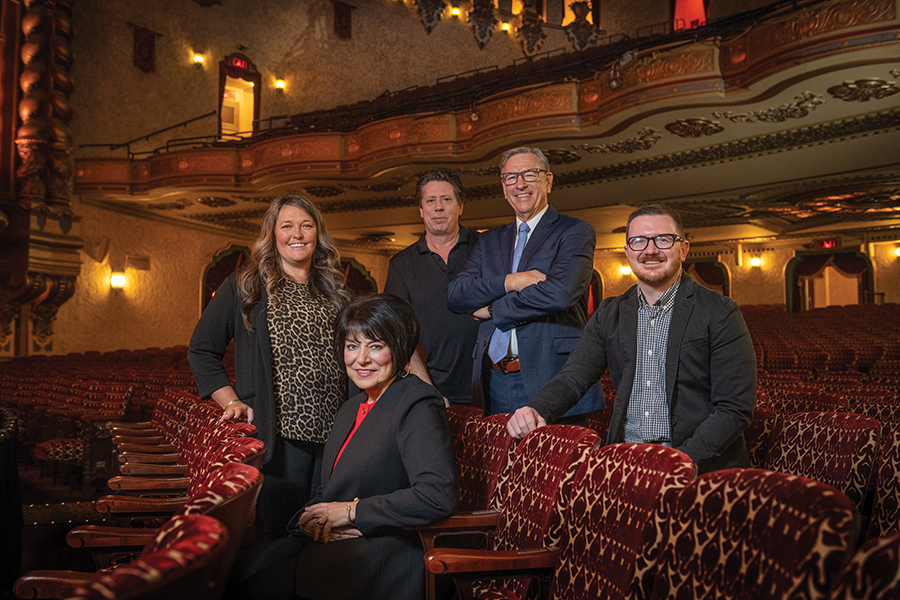
“I could name so many people,” she said. “I’ll just say this: every level of support we receive — every gift, no matter the amount — is a powerful act in helping to create change for our city.”
She noted the long-standing generosity of the Long and Copen families, whose support of the Keith-Albee spans generations. The Long family originally owned the land on which the theater stands, and both families are continuing that legacy with investments in its future. The Copen Family Foundation contributed $150,000 toward the renovation, followed by a $500,000 gift from Berridge Long Copen to create the Founders’ Club, a new space for pre-show VIP experiences and special events.
“We’ve seen incredible acts of kindness that are so transformative and powerful,” Hardin said, estimating the total cost of the renovations to be roughly $30 million. “In a community our size, to realize this kind of money is challenging — but Huntington rises to the challenge time and time again.”
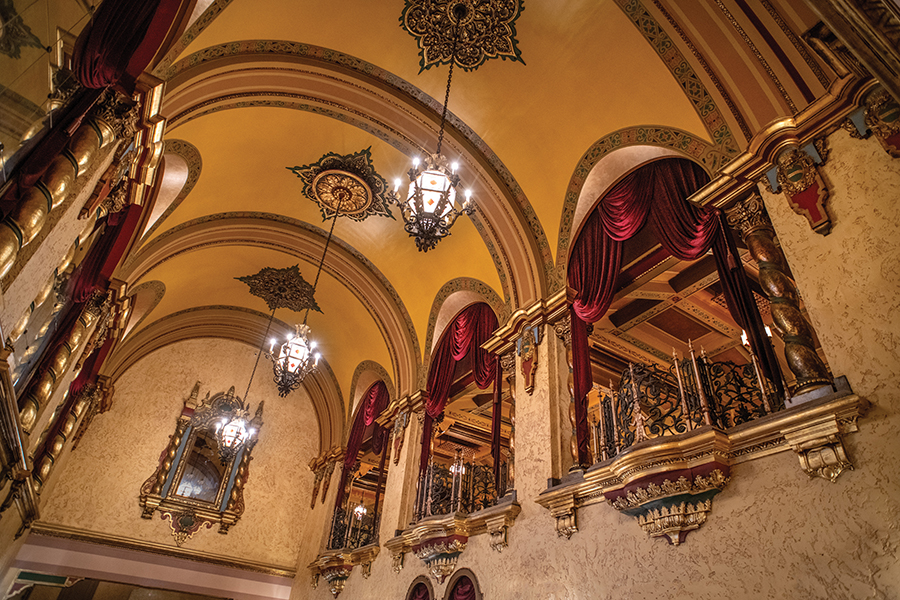
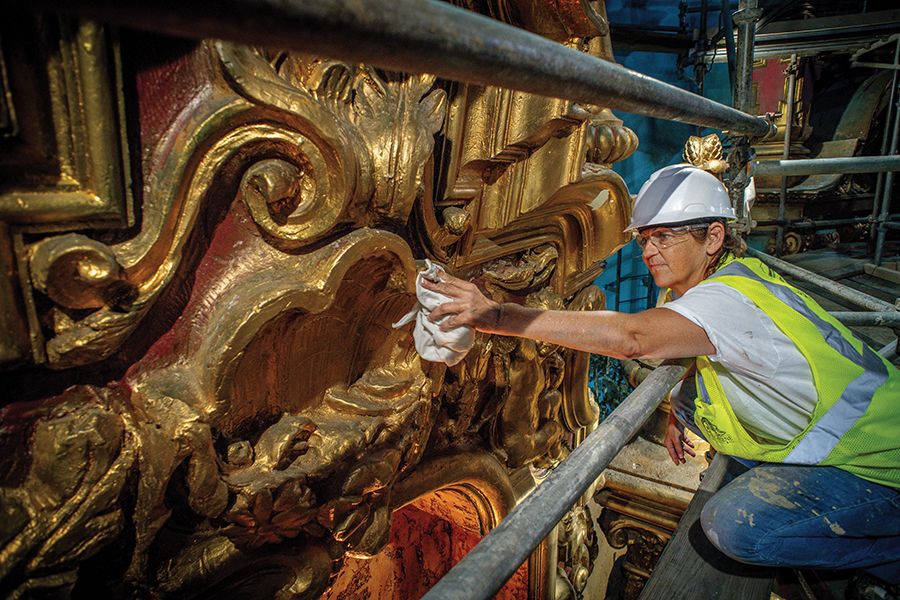
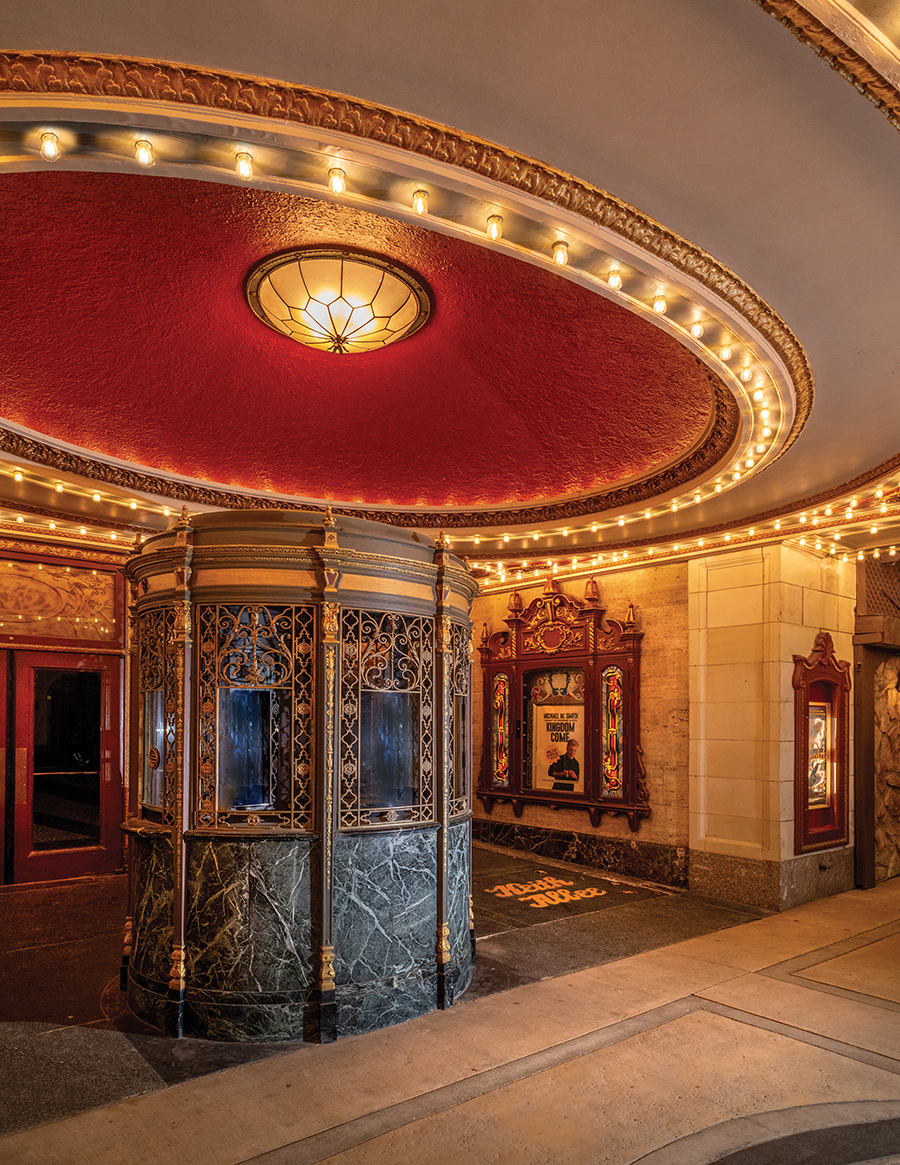
As part of the building-wide renovation, artisans have painstakingly restored plaster and paint. New carpeting, an exact replica of the original, was sourced from the same company that supplied it in 1928. Worn seating has been entirely replaced, with two new sections expanded to 20-22 inches per seat — significantly wider than the original 15-18 inches.
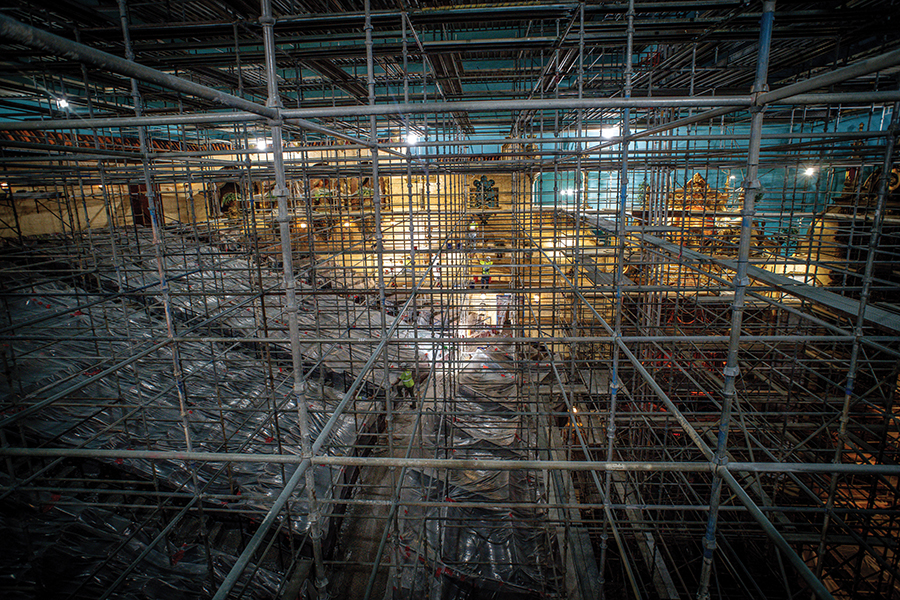
“This isn’t a modern building where you can just knock out some drywall,” Cooper said. “It’s all concrete and steel and brick and plaster, and you’ve got to have a good plan in place for what you’re doing. Once you do something, you can’t take it back.”
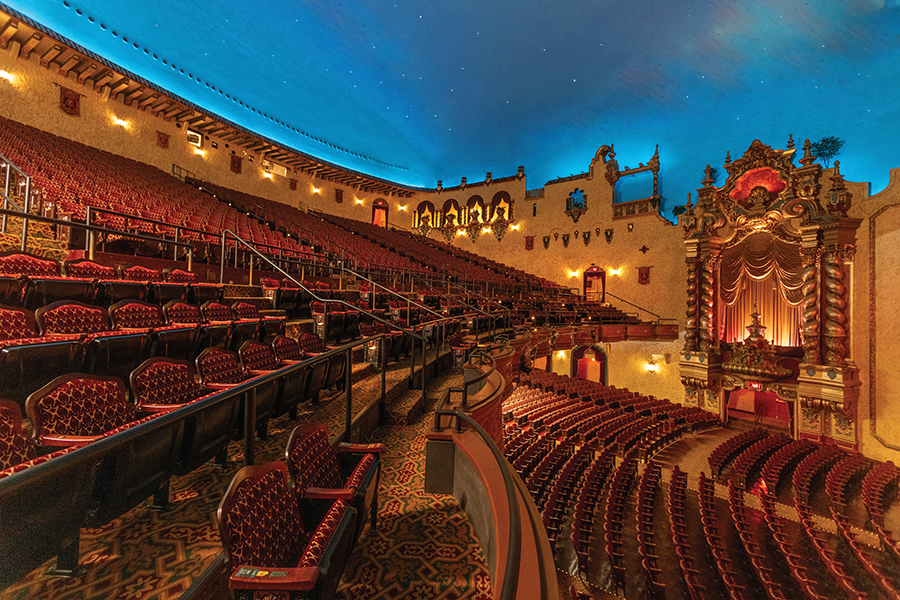
Some elements had to be recreated entirely. Marshall Advanced Manufacturing Center came to the rescue, Cooper said, replicating everything from light fixtures to brass vents to the air-conditioning grates under the seats.
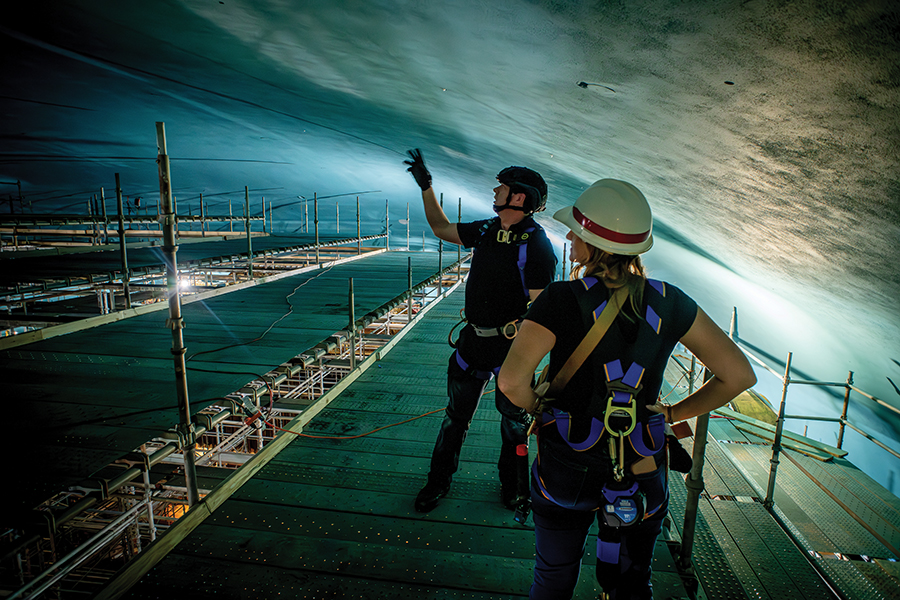
With the front of house complete, the restoration has shifted toward work that’s less visible but no less critical — things like waterproofing, fire and safety systems, plumbing and electrical upgrades, dressing room renovations and the structural improvements that will carry the Keith-Albee into its next century.
“We’ve gotten the theater back in good working order — but we’re not done yet,” Plymale said.
Of course, preserving the past is only part of the story. With a packed calendar featuring national productions, touring artists, community events and films presented on state-of-the-art projection and sound systems, the Keith-Albee is also redefining its role in the present.
Executive Director David Miller said his current focus is on expanding educational programming.
“I was introduced to the arts at a young age, and I know the importance of that and how life-changing it can be,” Miller said. “I am 100% where I am today because of arts education.”
More than anything, he said, he hopes the Keith-Albee remains a true gathering place for the community.
“You hear the phrase, ‘You can’t be all things to all people,’ but we have an opportunity to at least take a pretty good shot at that here,” he said. “We can show movies, Broadway shows and concerts. We can host weddings and business receptions in the middle of downtown. We can be an economic driver for Huntington and a regional hub for tourism and the arts. And most importantly, we can be a place where people come to spend time together. Especially now, in a very digital world, we can be a place for community.”
His vision echoes the sentiment expressed by the Hyman brothers at the Keith-Albee’s 1928 opening.
“We wish the people of Huntington to feel that this is their theater,” Sol Hyman said. “It was built for them, and we hope and believe that they will use and enjoy it — not only now, but through the long years.”